
“Don’t let your fear of what others think silence your voice.” — Brené Brown.
Over the past few weeks, we’ve taken a powerful journey together.
We started by uncovering why high performers stall and how leaders think differently. Then we explored the difference between career hustle and career strategy, shifting from busyness to intentional growth. Last week, we focused on building influence without authority, learning how trust and consistency create real leadership impact.
Now we arrive at the final piece of the puzzle.
Because once you’re doing meaningful work, thinking strategically, and building influence, there’s one skill that determines whether others truly recognize your value:
Your ability to advocate for yourself.
Welcome to the final article in our series, Career Ownership and Strategic Growth.
Why Self-Advocacy Feels So Difficult
Let’s be honest—talking about your own value can feel uncomfortable.
You don’t want to come across as arrogant.
You don’t want to sound like you’re bragging.
You don’t want to make others uncomfortable.
So what do many professionals do?
They stay quiet.
They hope their work speaks for itself. They wait to be noticed. They assume the right people will eventually see their effort.
Sometimes that happens.
Often, it doesn’t.
And that’s where growth stalls—not because you’re not capable, but because your value isn’t clearly communicated.
The Truth About Self-Advocacy
Self-advocacy is not about ego. It is about clarity.
It is not about saying, “Look how great I am.”
It is about saying, “Here’s the impact I’m making.”
When done well, self-advocacy actually builds trust. It helps others understand how you contribute, where you add value, and why you are ready for more.
Think about it this way:
If people don’t know what you bring to the table, they can’t invite you to bigger opportunities.
The Difference Between Confidence and Arrogance
This is where many people get stuck.
They confuse confidence with arrogance.
Arrogance says:
“I’m better than everyone else.”
Confidence says:
“I know the value I bring, and I’m here to contribute.”
Arrogance is loud and self-centered.
Confidence is calm and grounded in results.
The goal is not to be louder.
The goal is to be clearer.
How to Advocate for Yourself the Right Way
Here are four simple, effective ways to communicate your value without sounding arrogant.
1. Focus on Impact, Not Effort
Talking about how hard you worked is not as powerful as showing the results of your work.
Instead of saying:
“I worked really hard on this project.”
Say:
“This project helped improve our process and saved time for the team.”
Impact speaks louder than effort.
2. Share Progress, Not Just Outcomes
Don’t wait until the end of a project to speak up.
Keep others informed along the way:
Share updates
Highlight key milestones
Connect your work to team or company goals.
This creates visibility without feeling forced.
3. Use “We” When Appropriate
Self-advocacy does not mean taking all the credit.
Recognize the team while still owning your contribution.
For example:
“Our team improved the workflow, and I helped streamline the reporting process.”
This shows confidence and collaboration at the same time.
4. Be Specific and Honest
Avoid vague statements.
Be clear about what you did and why it mattered.
Instead of saying:
“I added value to the project.”
Say:
“I identified a gap in the process and introduced a solution that improved efficiency.”
Clarity builds credibility.
A Real-World Example
Imagine two professionals.
One completes great work but rarely talks about it. They assume their results will be noticed.
The other also delivers strong work but consistently shares updates, highlights impact, and communicates clearly.
When it’s time for a promotion or a new opportunity, who stands out?
It’s not about who is more talented.
It’s about who is more visible and understood.
The Mindset Shift
To advocate for yourself effectively, you need to shift your mindset.
Stop thinking:
“I don’t want to sound like I’m bragging.”
Start thinking:
“I want to make my contributions clear.”
You are not taking anything away from others by sharing your value.
You are helping others make informed decisions about where to invest opportunities, trust, and leadership.
Bringing It All Together
This is where everything from this series connects.
You avoid stalling by thinking beyond execution.
You grow faster by focusing on strategy over hustle.
You build influence through trust and consistency.
And now, you communicate your value with clarity and confidence.
This is what career ownership looks like.
It is intentional. It is proactive. And it is powerful.
Your Next Step
This week, try one simple action:
Share one win.
It could be in a meeting, an update, or a conversation.
Focus on the impact. Keep it clear. Keep it honest.
That one step can start changing how others see you—and how you see yourself.
If you are ready to continue building your confidence, visibility, and leadership presence, subscribe to the EXCEL2WIN Leadership Newsletter for weekly insights, tools, and strategies to help you grow with purpose.
Your voice matters.
Use it.
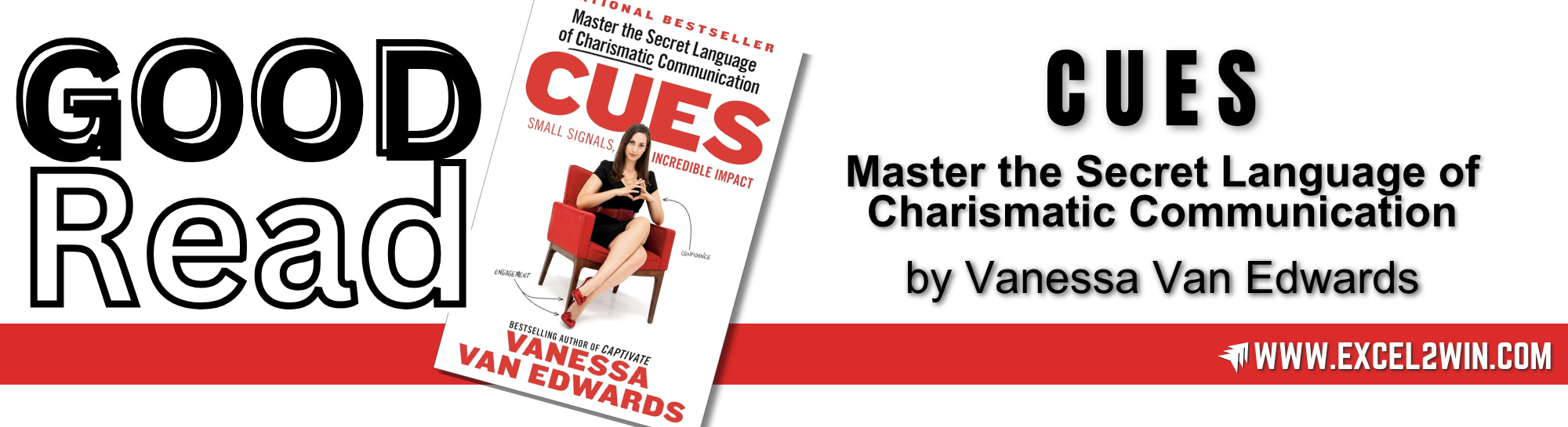
Cues: Master the Secret Language of Charismatic Communication
If you’ve ever wondered why some people naturally command attention while others struggle to be heard, Cues: Master the Secret Language of Charismatic Communication by Vanessa Van Edwards unlocks the answer.
This book dives into the science of communication, showing that it’s not just what you say—it’s how you say it. From body language and tone to subtle behavioral signals, Van Edwards breaks down the “cues” that shape how others perceive you. What makes this book powerful is how practical it is. You can immediately apply these insights to speak with more confidence, build trust faster, and make your message land with clarity.
This connects directly to our article, Advocating for Yourself Without Sounding Arrogant. Many professionals struggle to communicate their value without feeling awkward or overly self-promotional. Cues helps you strike that balance. It teaches you how to present yourself with confidence and authenticity, so your message feels natural, not forced.
If you want your voice to be heard and your value to be recognized, this book is a must-read.
Take the next step in your growth. Grab your copy of Cues today and subscribe to the EXCEL2WIN Leadership Newsletter for more insights to help you lead, communicate, and succeed with confidence.