



“Almost everything will work again if you unplug it for a few minutes, including you.” — Anne Lamott.
A young professional once told me, “I’ll rest once things calm down.” I smiled because I have heard that line many times before. I have also lived it. The problem is that things rarely calm down on their own. Deadlines keep coming. People keep needing answers. Problems keep finding their way to your inbox like they have your home address.
Throughout this EXCEL2WIN June Leadership Series, we have challenged hustle culture, looked at energy management, discussed leading through stress and change, and explored mental toughness without emotional shutdown. Now we close the series with a truth every growing leader must learn: recovery is not a reward for finishing the work. Recovery is part of how you remain strong enough to keep doing the work well.
Many leaders are not tired because they are weak. They are tired because they have built a leadership life with no recovery system. They work hard, push through, answer late-night messages, sacrifice sleep, and then wonder why their focus is fading and their patience is thinning.
Here is the leadership tension: you want to be dependable, productive, and excellent. But if you confuse constant availability with strong leadership, you will eventually become present in body but absent in energy, creativity, and emotional steadiness.
That is not leadership. That is slow leakage.
The Lie That Strong Leaders Don’t Need Recovery
Most people think recovery is what you do after the work is done. But in reality, recovery is what allows you to keep doing meaningful work with clarity and strength.
Think of it this way: your phone can have the best apps, fastest processor, and most expensive case, but if the battery is dead, none of it matters. The same is true for your leadership. Talent matters. Skill matters. Experience matters. But without recovery, your leadership battery eventually runs low.
And when your battery runs low, it shows.
You become more reactive. Small issues feel larger than they are. You stop listening well. You make short-term decisions because you no longer have the emotional margin to think long term.
A tired leader may still function, but functioning is not the same as flourishing. Hello?
Recovery is not laziness. Recovery is leadership maintenance.
As a next step, this article includes a free companion worksheet to help you apply these ideas to your own leadership. Use it to identify where you are running on fumes, where recovery is missing, and what practical rhythm you need to build next for further leadership development.
Recovery Must Be Built, Not Wished For
Many professionals say they value rest, but their calendar tells a different story. That may sound tough, but it is true. Your calendar often reveals your real priorities more honestly than your intentions do.
If recovery is not scheduled, protected, and practiced, it will be pushed aside by whoever has the loudest request.
You do not need a perfect life to recover well. You need intentional rhythms that help you reset before you crash. The goal is not to escape responsibility. The goal is to carry responsibility without losing yourself in the process.
Strong leaders do not just manage output. They manage renewal.

1. Create Daily Recovery Margins
Recovery does not always require a vacation. Sometimes it begins with small margins built into your day.
A ten-minute walk after a difficult meeting can reset your mind. Closing your laptop before dinner can help you reenter your personal life with presence. Taking five quiet minutes before responding to a tense message can keep you from sending something your future self will have to clean up.
These moments may seem small, but small recovery moments compound.
The mistake many leaders make is waiting until they are exhausted before they rest. That is like waiting until your car runs out of gas before thinking about fuel. You may survive that way for a while, but it is not a strategy.
Build pauses into your day before your body forces them on you.
2. Protect One Non-Negotiable Recovery Rhythm
Every leader needs at least one recovery rhythm that is treated as non-negotiable.
For some, it is morning quiet time. For others, it is exercise, journaling, prayer, reading, dinner with family, or one evening a week without work-related noise. The specific rhythm matters less than the consistency.
You need something that reminds you that you are a person before you are a performer.
That sentence may hit harder than expected, but it is important. You are not called to burn yourself out trying to prove your value. Your value is not measured by how unavailable you are to your own life.
Choose one rhythm and protect it. Not casually. Not only when convenient. Protect it like your leadership depends on it, because it does.
3. Learn the Difference Between Rest and Escape
Not all downtime restores you.
Scrolling for two hours may distract you, but it may not renew you. Binge-watching may give your mind a break, but it may not address the deeper fatigue in your soul. There is no judgment here. We all need light moments. But leaders must learn to ask a better question: “Is this helping me recover, or is it just helping me avoid?”
Real recovery restores your capacity. Escape only postpones your fatigue.
Healthy recovery may include sleep, solitude, exercise, worship, meaningful conversations, hobbies, nature, or simply being still long enough to hear yourself think again.
Pay attention to what actually renews you. Then do more of that on purpose.
4. Stop Wearing Exhaustion as a Badge of Honor
Some work cultures reward exhaustion. People brag about how little they sleep, how many meetings they attend, and how many emails they answer after hours.
Let’s be honest: that is not always commitment. Sometimes it is poor boundaries dressed up as ambition.
You can be passionate without being depleted. You can be driven without being drained. You can be committed without being consumed.
The best leaders are not the ones who run the fastest until they collapse. They are the ones who build a pace they can sustain.
Leadership is not a sprint fueled by adrenaline. It is a long road that requires wisdom, humility, and rhythm.
A Better Way Forward
Recovery is not something you earn after you have done enough. Recovery is part of how you remain healthy enough to do what matters.
So ask yourself: Where am I consistently ignoring signs of depletion? What recovery rhythm do I need to protect before burnout makes the decision for me?
You do not need to overhaul your entire life this week. Start with one honest adjustment. Close the laptop earlier. Take the walk. Protect the morning. Turn off the notifications. Schedule the quiet.
The goal is not to do less because you lack ambition. The goal is to recover well so your ambition does not destroy the very life you are trying to build.
As this June series closes, keep going deeper. Visit our Digital Download Store for upcoming ebooks, workbooks, free downloads, leadership tools, and practical resources designed to help you grow with clarity, discipline, and sustainable strength.
Build recovery into your leadership life. Not later. Not someday. Now.
Because sustainable leaders do not just know when to push. They also know when to pause.

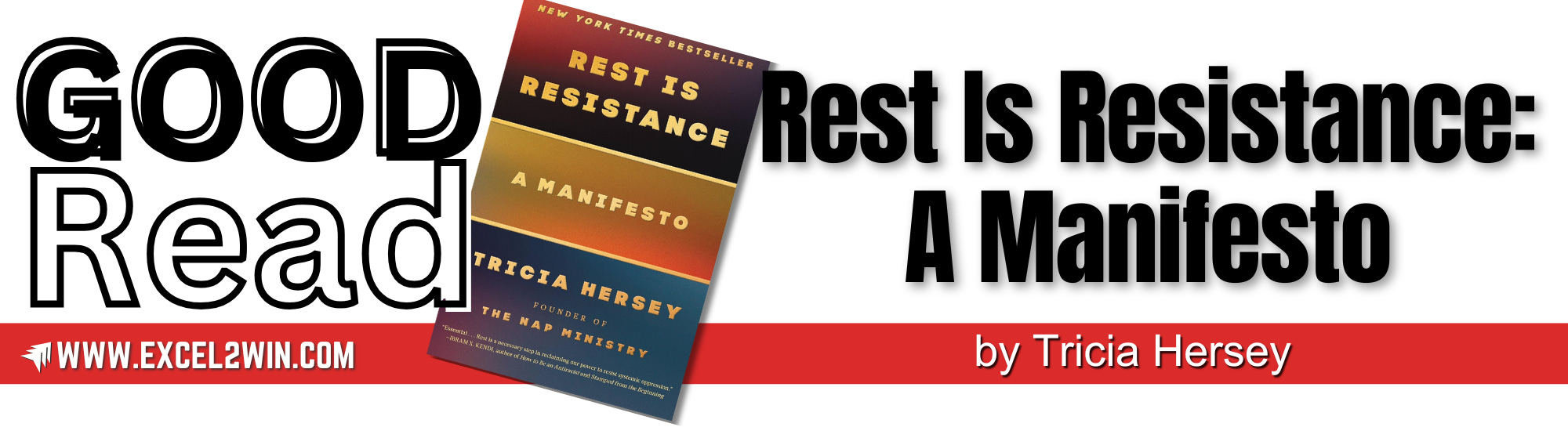
Rest Is Resistance: A Manifesto
In Rest Is Resistance: A Manifesto, Tricia Hersey delivers a timely and necessary message: rest is not a luxury, weakness, or afterthought—it is a powerful act of reclaiming our humanity. Hersey challenges the culture that tells us our worth is measured by exhaustion, productivity, and constant availability. Instead, she invites readers to see rest as a form of wisdom, healing, and resistance against systems that keep people overworked, disconnected, and running on empty.
This book is especially relevant to leaders and young professionals who feel the pressure to always be “on.” It does not simply say, “Take a nap.” It asks a deeper question: What kind of life are you building if you never make room to recover?
That connects beautifully with our article, “Building Recovery Into Your Leadership Life.” Both remind us that sustainable leadership requires more than ambition. It requires daily recovery margins, protected rhythms, and the courage to stop wearing exhaustion as a badge of honor.
If you are ready to rethink rest, leadership, and long-term success, purchase Rest Is Resistance: A Manifesto and subscribe to The EXCEL2WIN Leadership Newsletter for more practical growth tools

.