“Before you are a leader, success is all about growing yourself. When you become a leader, success is all about growing others.” — Jack Welch.
Last week, we talked about what leadership looks like in a hybrid world, how clarity, trust, and intentional connection have replaced proximity and control. This week, we’re going one level deeper. Once you understand how leadership has changed, the next question becomes: how do you actually lead people effectively within it?
That is where the shift from controlling to coaching comes in.
The Reality Tension
Let’s be honest—most professionals step into leadership with good intentions.
You want results. You want your team to succeed. You want things done right.
So what do you do?
You step in. You correct. You guide. You make decisions. You stay close to the work.
At first, it feels responsible.
However, over time, something subtle starts to happen.
Your team becomes dependent.
You become overwhelmed.
And progress slows rather than speeds up.
That is where most professionals get stuck.
Most people think strong leadership means having the answers and making sure everything is done correctly. However, in reality, that approach creates short-term efficiency and long-term limitation.
Control may get the job done, but it rarely builds people.
The Shift That Changes Everything
Here is the truth most leaders have to learn the hard way:
If your team cannot function without you, you are not leading; you are controlling. Hello?
That might sound strong, but it is real.
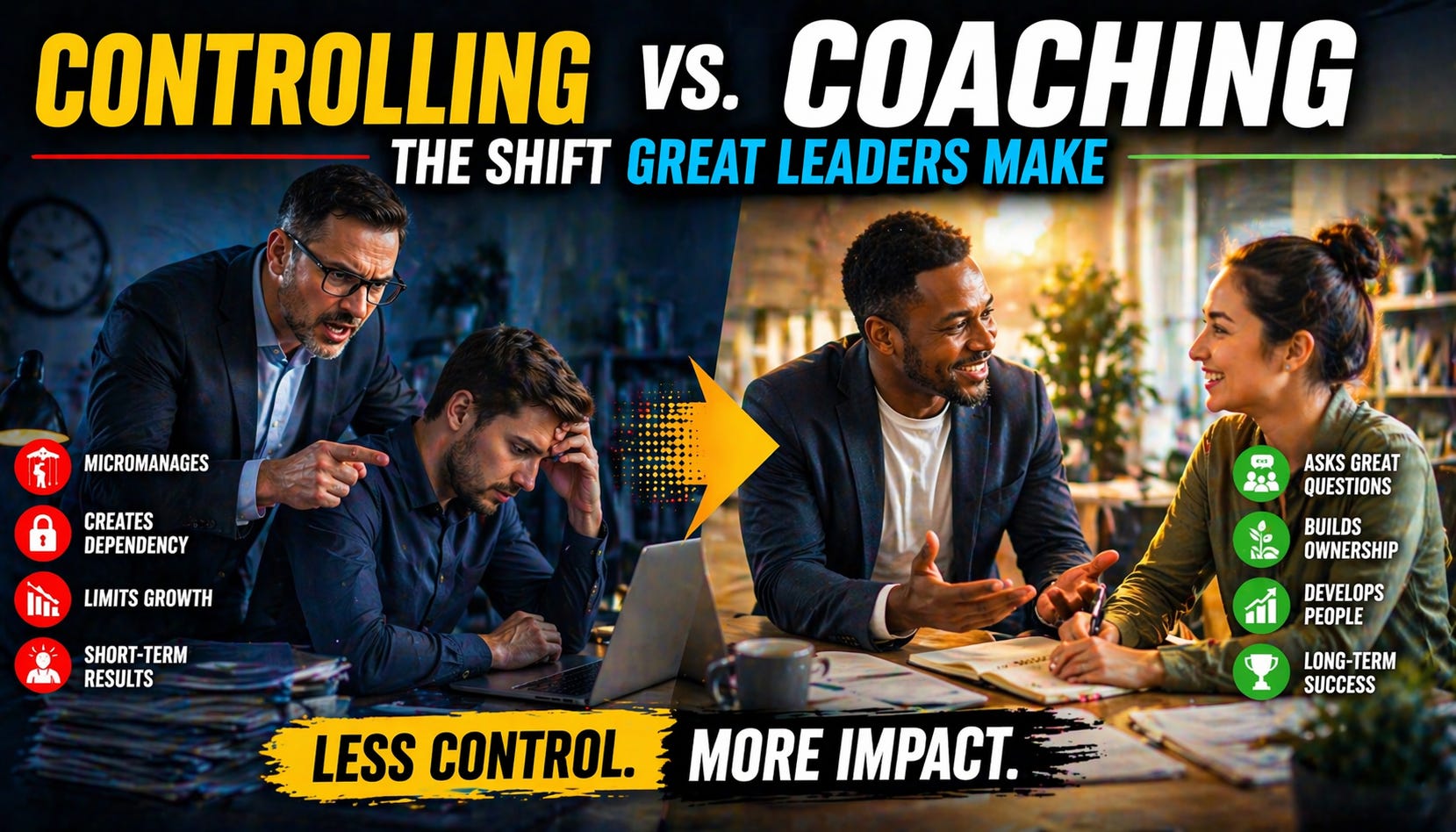
Controlling leaders focus on outcomes through themselves.
Coaching leaders focus on outcomes through others.
Think of it this way:
A controlling leader asks:
“What needs to be done, and how do I make sure it happens?”
A coaching leader asks:
“What does this person need to grow so they can own this fully?”
However, here is where things begin to shift.
When you move from controlling to coaching, your role shifts from being the center of execution to a catalyst for development.
That changes everything, because now you are not just producing results, you are multiplying capability.
Leadership is not about being needed. It is about making yourself less necessary.
What Coaching Leadership Actually Looks Like
Let us make this practical. Coaching is not just a mindset; it is a set of behaviors you can apply immediately.
1. Ask More Than You Tell
Controlling leaders default to giving answers.
Coaching leaders ask better questions.
Instead of:
“Here’s what you should do…”
Try:
“What options are you considering?”
“What do you think is the best next step?”
This does two things:
It develops critical thinking.
It builds ownership
At first, it may feel slower. However, over time, your team becomes faster and more confident.
2. Shift from Fixing to Developing
When something goes wrong, controlling leaders jump in to fix it.
Coaching leaders pause and use it as a development moment.
That does not mean ignoring problems; it means addressing them differently.
Instead of taking over, walk through it with them:
What happened?
What would you do differently next time?
What did you learn?
Mistakes are not interruptions to leadership; they are opportunities for it.
3. Set Expectations, Then Step Back
This is where many leaders struggle.
You set expectations, but then you stay too involved.
You check in too often. You adjust too quickly. You step in too early.
Why?
Because control feels safe.
However, here is the reality check:
Most people think stepping back means losing control. However, in reality, it creates space for ownership.
Set clear expectations:
What success looks like
What the timeline is
What support is available
Then step back and let them execute.
Trust is not proven by what you say. It is proven by what you allow.
4. Measure Growth, Not Just Performance
Controlling leaders focus on whether the work gets done.
Coaching leaders focus on whether the person is growing.
Yes, results matter. However, long-term leadership is about building people who can produce results consistently, without constant oversight.
Ask yourself:
Is this person more capable today than they were last month?
Are they taking more ownership?
Are they thinking more independently?
Because that is the real win.
Reflection & Application
Let us bring this back to you.
Where are you stepping in too quickly instead of developing your team?
Who on your team needs more coaching and less direction from you right now?
Be honest.
Because the difference between where you are and where you want to be as a leader often comes down to one thing:
How willing are you to let go of control in order to build capability?
Moving Forward: Putting Coaching Leadership Into Practice
Think back to the opening idea: leadership is about growing others.
That is easy to say. However, it requires a real shift in how you show up every day.
Controlling may give you immediate results.
Coaching builds lasting impact.
In today’s workplace, especially in hybrid environments, you do not have the luxury of being everywhere, involved in everything.
So you have to build people who can lead, decide, and execute without you.
That is what great leaders do.
Here’s your challenge:
This week, choose one person on your team and intentionally coach them rather than direct them. Ask more questions. Step back more often. Create space for them to think and grow.
Start small, but start intentionally.
If you are serious about becoming the kind of leader people grow under, not just work for, explore the EXCEL2WIN archives for more insights that will sharpen your leadership. Be sure to subscribe to the EXCEL2WIN Leadership Newsletter so you do not miss what is next.
Next week, we are tackling a topic that can either build trust or break it: how to give feedback that strengthens relationships instead of creating fear.
That is a skill every leader needs to master.
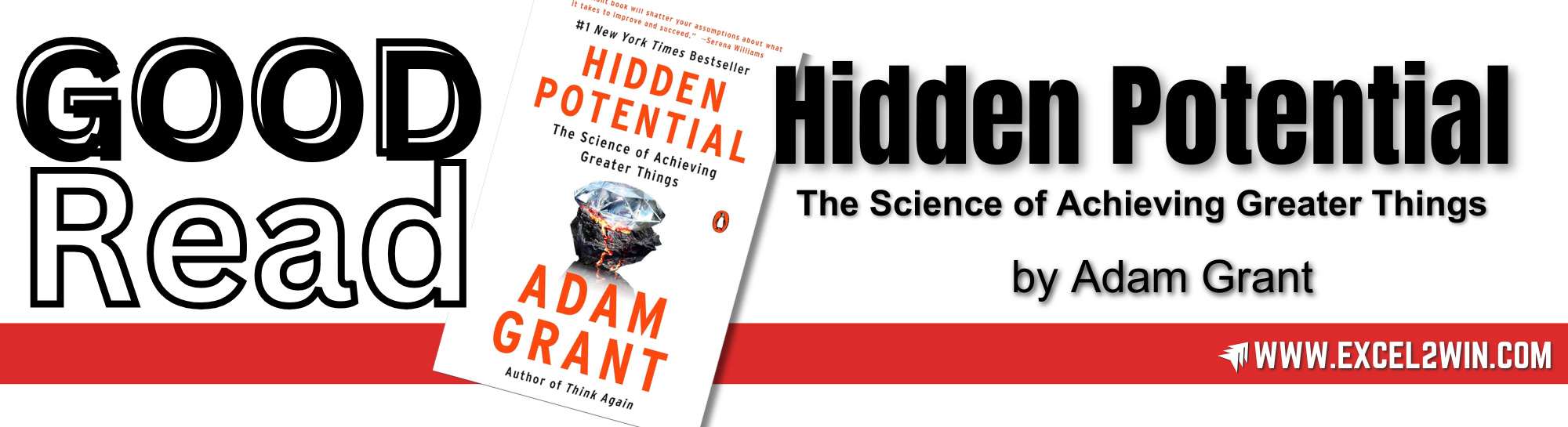
Hidden Potential
There’s a common belief in the workplace: some people have it, and some don’t. Talent. Ability. Leadership presence. But Hidden Potential by Adam Grant challenges that idea in a powerful way.
Grant makes it clear—success isn’t reserved for the naturally gifted. It’s built through character, effort, and the right kind of support. He shifts the focus from proving yourself to improving yourself, offering practical insights on how individuals grow, learn, and become more capable over time.
And this connects directly to the leadership shift we talked about—coaching versus controlling.
Controlling leaders focus on immediate results. Coaching leaders invest in long-term development. Hidden Potential shows why that matters. When leaders create environments that encourage learning, resilience, and ownership, people don’t just perform—they evolve.
Think of it this way: your role as a leader isn’t to have all the answers. It’s to help others discover what they’re capable of.
Because potential doesn’t disappear—it develops.
If you’re serious about building stronger, more capable teams, this book is a must-read.
Pick up your copy today and take the next step in your leadership journey. And don’t forget to subscribe to The EXCEL2WIN Leadership Newsletter for more insights that help you grow, lead, and win.