



“Sometimes the best decision is the one you make with the courage you have, not the certainty you wish for.” — Unknown.
In many professional settings, individuals are asked to lead projects with tight deadlines and incomplete information. The expectations may be clear—but the path forward often isn’t.
It’s common for people in these situations to think, What if I make the wrong decision? What if I miss something important?
As a result, decision-making gets delayed. More input is gathered. More time is spent waiting for clarity.
But that clarity doesn’t always come.
Over time, the delay itself can create more pressure than the decision would have.
This pattern highlights an important lesson that many professionals come to understand:
Leadership is not about having all the answers. It’s about making thoughtful decisions without them.
In our March series on confidence, presence, and executive mindset, last week we explored executive presence for emerging leaders and the role of clarity, composure, and consistency. Building on that,
We now close the series by focusing on a critical skill that ties everything together: decision-making under uncertainty.
Because no matter how confident or composed you are, your leadership will ultimately be defined by the decisions you make—especially when the path isn’t clear.
Why Uncertainty Is Part of Leadership
Many emerging professionals believe that strong leaders always have clear answers.
In reality, uncertainty is part of the role.
Markets shift. Priorities change. Information is incomplete.
Waiting for perfect clarity often leads to missed opportunities.
Strong leaders don’t wait for perfect conditions.
They learn how to move forward with incomplete information and sound judgment.
Shift from Perfection to Progress
One of the biggest barriers to decision-making is the desire to get it “right.”
But in many situations, there is no perfect decision—only the best possible decision with the information available.
Instead of asking:
“What is the perfect choice?”
Ask:
“What is the most reasonable next step?”
This shift reduces pressure and increases momentum.
Progress builds clarity.
Waiting for perfection creates delay.
Use a Simple Decision Framework
When faced with uncertainty, complexity can slow you down.
A simple framework can help you move forward with confidence.
Try this three-step approach:
1. Clarify the goal
What outcome are you trying to achieve?
2. Identify your options
What are the realistic paths forward?
3. Evaluate the impact
What are the potential risks and benefits of each option?
You don’t need every detail.
You need enough clarity to make a thoughtful choice.
Balance Confidence with Humility
Strong decision-making requires both confidence and humility.
Confidence allows you to act.
Humility keeps you open to learning.
Confident leaders say:
“Based on what we know, this is the direction we’re taking.”
Humble leaders also say:
“We’ll adjust if new information becomes available.”
This balance creates trust.
It shows decisiveness without arrogance.
Involve Others Without Losing Ownership
Leadership doesn’t mean making decisions alone.
It means knowing when to seek input—and when to decide.
Gather perspectives from your team.
Ask thoughtful questions.
Listen for insights you may have missed.
But avoid staying in “analysis mode” for too long.
At some point, leadership requires ownership.
You gather input.
Then you decide.
Accept That Not Every Decision Will Be Perfect
Even experienced leaders make decisions that don’t work out as planned.
That’s part of growth.
The goal is not to eliminate mistakes.
The goal is to learn quickly and adjust effectively.
When a decision doesn’t go as expected:
Review what happened
Identify what you learned.
Apply that insight moving forward.
Every decision becomes a building block for better judgment.
Speed Matters—But So Does Thoughtfulness
In fast-paced environments, timing matters.
Deciding too slowly can create missed opportunities.
Deciding too quickly without thought can create unnecessary risk.
Strong leaders find the balance.
They move with intention.
They don’t rush—but they don’t stall.
They recognize when they have enough information.
Showing Up Like a Leader Before the Title
You don’t need a leadership title to practice decision-making.
Every day presents opportunities to build this skill:
Choosing how to prioritize your work
Deciding how to respond to challenges
Offering recommendations instead of waiting for direction
These moments build confidence, credibility, and trust.
And over time, they shape how others see your leadership potential.
Closing the Series: Confidence, Presence, and Mindset
As we wrap up this March series, one message stands out:
Leadership is not about certainty.
It’s about clarity, courage, and continuous growth.
You’ve explored how to:
Build confidence through action.
Communicate calmly under pressure.
Overcome imposter syndrome
Develop executive presence
And now, make decisions in the face of uncertainty.
Each of these skills works together.
They form the foundation of showing up like a leader—before the title.
So the next time you’re faced with a decision and don’t have all the answers, remember: You don’t need perfect information. The key is to move forward thoughtfully, using good judgment and learning as you go.
Rely on your judgment, be willing to act, and embrace the courage to keep learning. Leadership grows from these moments—even in the absence of certainty.
If this series has added value to your leadership journey, I invite you to subscribe to the EXCEL2WIN Leadership Newsletter for more insights, tools, and strategies designed to help you grow, lead, and succeed with confidence.
Your leadership journey doesn’t start with all the answers.
That first step, taken with thoughtfulness and courage, is what defines your journey as a leader.
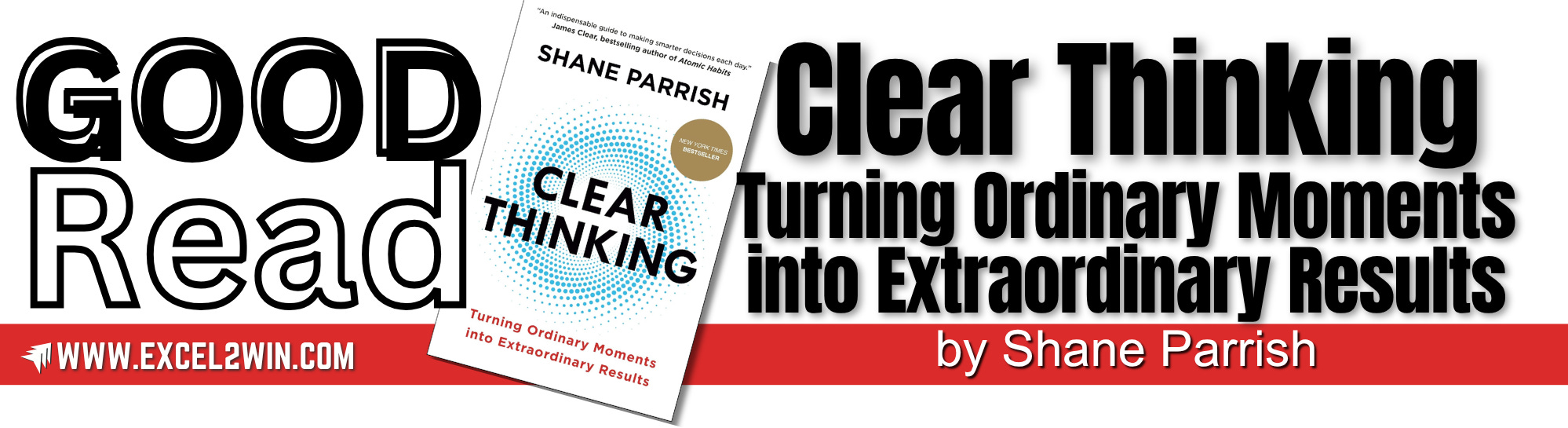
Clear Thinking: Turning Ordinary Moments into Extraordinary Results
In a world filled with constant noise, pressure, and rapid decisions, the ability to think clearly has become a true competitive advantage. In Clear Thinking: Turning Ordinary Moments into Extraordinary Results, Shane Parrish offers a powerful reminder: the quality of your decisions is shaped long before the decision itself.
Parrish explains that many poor decisions are not caused by lack of intelligence, but by reactive thinking—moments when emotions, urgency, or distractions take control. Through practical mental models and real-world examples, he teaches readers how to pause, think more deliberately, and respond with intention instead of impulse. The goal isn’t perfection—it’s better judgment, one decision at a time.
This message aligns closely with our article on “Decision-Making When You Don’t Have All the Answers.” When information is incomplete, your thinking process matters even more. Clear thinking allows you to balance confidence with humility, act with intention, and adjust as new information emerges.
Parrish’s insights reinforce a simple but powerful truth: better thinking leads to better outcomes.
If you’re ready to strengthen your decision-making and lead with greater clarity, consider adding Clear Thinking by Shane Parrish to your reading list. And for more leadership insights, subscribe to the EXCEL2WIN Leadership Newsletter to continue growing your mindset, confidence, and impact.

Great article and some really good advice