

“The measure of leadership is not avoiding difficult conversations. It’s learning to have them well.”
Years ago, I managed a young professional with tremendous potential. He was intelligent, dependable in many ways, and someone I genuinely enjoyed working with. There was just one recurring problem.
He consistently missed deadlines.
The delays weren’t severe enough to derail a project, but they happened often enough that the rest of the team had to scramble to finish reports, prepare presentations, and meet our commitments. Every late delivery created unnecessary pressure for everyone else.
I knew I needed to address it.
But I didn’t.
If I’m being honest, I avoided the conversation because I liked him. I didn’t want him to feel criticized, and I convinced myself the habit would eventually correct itself.
It didn’t.
By the time we finally sat down together, the issue had become much larger than it ever needed to be. Ironically, the conversation itself wasn’t nearly as difficult as I had imagined, and the problem was resolved surprisingly quickly.
Looking back, I learned one of the most valuable leadership lessons of my career.
I wasn’t protecting the relationship by avoiding the conversation.
I was allowing the problem to become part of the relationship.
That lesson has stayed with me ever since.
Leadership Truth
Great leaders don’t avoid difficult conversations.
They make difficult conversations safe.
Reality Check
Many professionals believe that preserving relationships means avoiding uncomfortable conversations.
The opposite is usually true.
Avoidance protects today’s comfort while quietly damaging tomorrow’s trust. Healthy relationships grow stronger when people are willing to speak honestly with respect and genuine care.
This is exactly where the C.L.E.A.R. Communication Framework becomes indispensable. During the first two weeks of this series, we learned how to communicate with clarity and listen with intention. Now those skills come together in the conversations that often define leadership credibility.
Using the C.L.E.A.R. Framework
C – Connect Before You Correct
People are far more willing to receive feedback when they know you value them.
Begin by acknowledging the person, affirming your shared goals, or expressing appreciation for their contributions. You’re not minimizing the issue. You’re reinforcing that the relationship matters.
L – Listen Before You Lead
Once you’ve shared your concern, ask questions before offering solutions.
“What happened?”
“What obstacles were you facing?”
Listening often uncovers facts that assumptions never will. Sometimes the issue isn’t unwillingness. It’s uncertainty, competing priorities, or a lack of resources.
E – Express the Truth with Empathy
Speak honestly, but focus on observable behavior instead of personal character.
Compare these two statements:
“You’ve become unreliable.”
“I’ve noticed three deadlines were missed this month, and it’s affecting the rest of the team.”
One attacks the person.
The other addresses the problem.
A – Align Around Solutions
The goal isn’t to prove you’re right.
It’s to move forward together.
Ask, “What needs to change?” “What support would help?” “What commitment can we both make before our next meeting?”
Solutions create momentum where blame creates resistance.
R – Reinforce the Relationship
Don’t let the conversation end with correction.
End with encouragement.
Express confidence in the person’s ability to improve, thank them for their openness, and follow up afterward.
People often forget the exact words you used.
They rarely forget how you made them feel.
Three Leadership Habits Worth Practicing
Prepare your heart before preparing your words. If your goal is to win the conversation, you’ve already lost the relationship.
Focus on the future more than the past. Accountability should always point toward growth, not guilt.
Finally, assume positive intent whenever possible. Most people genuinely want to succeed. Leading with curiosity instead of accusation opens the door to meaningful change.
Strong leadership isn’t about avoiding tension.
It’s about creating enough trust to move through it together.
Leadership Resource of the Week
Crucial Conversations: Tools for Talking When Stakes Are High by Kerry Patterson, Joseph Grenny, Ron McMillan, and Al Switzler remains one of the best practical guides for handling emotionally charged conversations with confidence, clarity, and respect.
Leadership Challenge
Think about one conversation you’ve been avoiding.
Before you schedule it, write down how you’ll Connect, Listen, Express, Align, and Reinforce using the C.L.E.A.R. Framework.
Preparation won’t eliminate discomfort.
But it will replace uncertainty with confidence.
The conversations that test your leadership are often the ones that shape it.
Handle them with courage, empathy, and honesty, and you’ll discover that difficult conversations don’t have to damage relationships.
Quite often, they’re the very conversations that strengthen them.

Next Week
We’ll conclude the July series by exploring Storytelling for Leaders (Even If You’re Not a “Storyteller”) and discover how authentic stories create connection, communicate vision, and inspire people to action.
Join the Conversation
What’s one difficult conversation you’ve been avoiding, and what would change if you chose to have it this week?
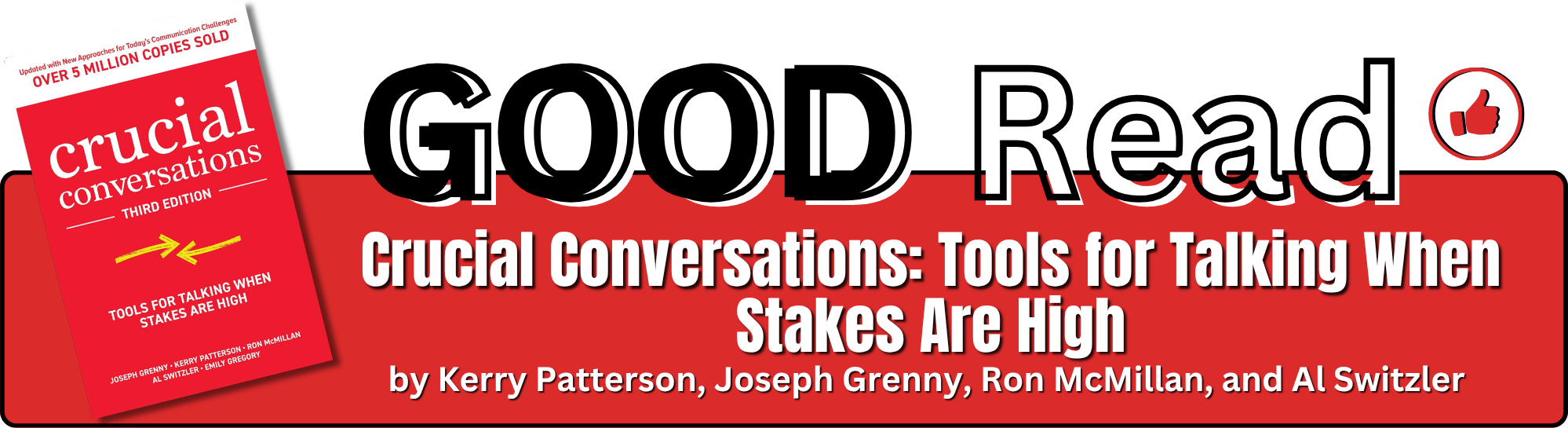
Crucial Conversations: Tools for Talking When Stakes Are High
Some of the most important moments in leadership don’t happen during presentations, strategy sessions, or annual reviews. They happen in conversations where emotions are high, opinions differ, and the outcome truly matters. That’s exactly where Crucial Conversations shines.
Authors Kerry Patterson, Joseph Grenny, Ron McMillan, and Al Switzler provide a practical roadmap for navigating difficult discussions with confidence, composure, and respect. Rather than avoiding conflict or allowing emotions to take control, the book teaches readers how to foster an atmosphere of psychological safety in which honest dialogue can flourish. You’ll learn how to stay focused under pressure, listen with genuine curiosity, express your perspective without becoming defensive, and work toward solutions that strengthen relationships rather than damage them.
These principles closely mirror this week’s EXCEL2WIN article, Difficult Conversations Without Damaging Relationships. Just as the C.L.E.A.R. Communication Framework™ encourages leaders to connect, listen, express, align, and reinforce, Crucial Conversations demonstrates that difficult discussions are opportunities to build trust, accountability, and stronger teams when handled with wisdom and empathy.
If you want to become the kind of leader who doesn’t avoid hard conversations but leads them well, this book deserves a place on your bookshelf.
Purchase your copy today, then subscribe to the FREE EXCEL2WIN Leadership Newsletter for practical leadership insights, companion workbooks, and weekly tools to help you communicate with greater clarity, confidence, and influence.