“You do not rise to the level of your goals. You fall to the level of your systems.”— James Clear.
It’s the first Monday of the year. You’re back at work, coffee in hand, scanning emails and jumping into meetings. Somewhere—maybe in a notebook, maybe in your phone—you wrote down goals just days ago. Career growth. Better leadership. More focus. A stronger version of yourself.
You meant every word.
And yet, if you’re honest, there’s a quiet hesitation beneath the motivation. You’ve started years like this before. The goals were real then, too. What changed wasn’t your ambition—it was everything else that slowly got in the way.
That’s the part most goal-setting advice ignores.
Why Goals Alone Keep Letting Us Down
Goals are not the problem. They’re useful. They give direction and help us aim.
But direction without movement doesn’t change anything.
Most professionals don’t fall short because they lack discipline or drive. They struggle because their daily routines never change. Goals sit on paper while life continues at full speed. Meetings pile up. Energy gets stretched. Good intentions get postponed.
That’s not a motivation issue. It’s a systems issue.
The Difference Between Wanting and Designing
Two people can want the same outcome and end up in completely different places.
One keeps pushing, restarting, and feeling frustrated. The other makes steady progress without dramatic effort. The difference isn’t talent or intelligence. Its design.
Design shows up in how time is structured, how work flows, and how decisions are made when things get busy. When progress depends on willpower, it eventually breaks down. When progress is built into the system, it becomes repeatable.
Desire starts the conversation. Design determines the result.
What a System Really Is
A system isn’t complicated. It’s simply how things actually get done.
It shows up in small, often overlooked places:
How you start your day
How you prepare for important conversations
How you follow up after meetings
How you create space to learn and reflect
Your system is already shaping your career—whether you’ve intentionally designed it or not. If your goal says one thing but your calendar says another, the calendar wins every time.
That’s why so many capable professionals feel stuck despite working hard. They’re trying to achieve new results with old systems.
A Better Question to Ask This Year
Instead of asking, What do I want to achieve this year? Try asking something more useful:
What system would make this inevitable?
That question changes everything. It shifts your focus from outcomes to ownership. It moves you from hoping to building. Suddenly, progress isn’t about feeling motivated—it’s about setting up conditions that support the behavior you want to repeat.
This way of thinking is strongly influenced by the principles in Atomic Habits, but applied through a professional and leadership lens. Goals still matter, but they are not the engine. Systems are.
Introducing the Systems That Win™ Framework
This idea is the foundation of what I call the Systems That Win™ Framework.
At its core, the framework is simple:
Goals provide direction, but systems create movement.
When systems are strong, progress doesn’t depend on perfect weeks or high energy. It continues when work is demanding, and life is full. When systems are weak, even the best goals fade under pressure.
Careers aren’t built in big moments. They’re built in small, repeatable actions that compound over time.
One Simple Step to Take This Week
You don’t need to overhaul your life to start applying this.
Choose one goal that genuinely matters to you this year. Now look at what you currently do related to it. Not what you plan to do—what you actually do.
Ask yourself honestly: Is this system helping me move forward, or quietly holding me back?
Awareness comes before improvement. Once you see the system, you can begin to redesign it.
If You Want This Year to Be Different
Over the next few weeks, we’ll explore how habits strengthen or weaken systems, why momentum matters more than intensity, and how strong systems can create success even before goals are fully clear.
If you want to keep growing in this direction, subscribe to the EXCEL2WIN Leadership Newsletter by clicking the link below. Receive practical, thoughtful articles on leadership and personal development to help you advance your career and your life—without relying solely on motivation.
Goals can inspire you.
Systems can change you.
And this year, that difference matters.
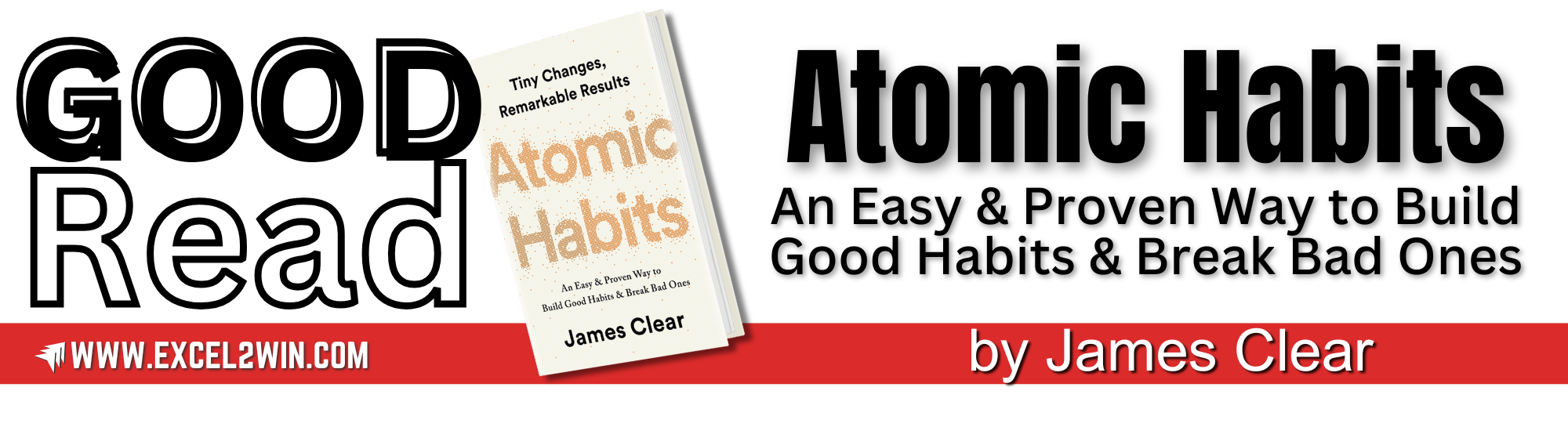
If there’s one book that quietly changes how you think about growth, discipline, and success, it’s Atomic Habits by James Clear. I’ve reviewed this book in past articles, and I continue to believe it’s incredibly apropos to this topic and theme—because it explains why goals so often fail and what actually works instead.
At its heart, Atomic Habits isn’t about dramatic transformations. It’s about small, consistent actions that compound over time. Clear reminds us that success doesn’t come from setting bigger goals, but from building better systems—the exact idea explored in the article Goals Give Direction—But Systems Create Movement. Goals point you somewhere, but habits and systems are what carry you forward, especially when motivation fades.
Clear breaks down how habits are formed, how the environment shapes behavior, and how identity-based change creates lasting results. The message is empowering: you don’t need to overhaul your life. You just need to design routines that make progress inevitable.
If you’re serious about building momentum in your career and leadership journey, this book belongs on your shelf—and in your daily thinking.
Pick up Atomic Habits today and start building systems that work for you, not against you. And for more practical leadership insights like this, subscribe to The EXCEL2WIN Leadership Newsletter and keep growing with intention.