
“Anyone can hold the helm when the sea is calm.” — Publilius Syrus.
A project deadline has been suddenly moved up. The client is frustrated. Your team is waiting for direction. The room is tense, and everyone is looking to someone for answers.
Moments like this happen in every career.
What separates strong leaders from everyone else is not that they avoid pressure. It’s that they know how to respond to it.
Their communication becomes the anchor.
Last week’s article in our March series explored the idea that confidence is a skill, not a personality trait. Confidence grows through preparation, action, and small wins over time.
This week, we’re building on that idea by looking at what happens when pressure shows up. Because confidence matters most when things feel uncertain.
How leaders communicate in stressful moments often determines whether a team feels panic or stability.
Calm Communication Builds Trust
When pressure rises, people instinctively look for signals. They watch tone of voice, body language, and word choice.
If a leader appears frantic, frustrated, or unsure, that feeling spreads quickly.
But calm communication does the opposite.
It reassures the team that the situation is manageable.
Being calm doesn’t mean ignoring problems or pretending everything is perfect. It means acknowledging the challenge while showing that a path forward exists.
A calm voice, clear message, and steady posture can instantly lower the emotional temperature in a room.
Great leaders understand that their presence sets the tone.
Pause Before You Speak
Pressure often creates urgency. And urgency makes people speak too quickly.
When leaders react immediately, they sometimes convey confusion rather than clarity.
One of the most powerful habits in high-pressure situations is something simple: pause.
Take a breath. Collect your thoughts. Then speak.
This short pause signals control and thoughtfulness. It also allows you to organize your message so others can understand it.
Even five seconds can make a difference.
Strong communicators know that calm thinking produces clear communication.
Focus on Clarity, Not Complexity
When people feel stress, they often over-explain.
They provide too many details, jump between topics, or talk in circles. This actually increases confusion.
In tense moments, clarity matters more than complexity.
Try this simple structure when communicating under pressure:
First, state the situation clearly.
Second, explain the immediate priority.
Third, outline the next step.
For example:
“Here’s where we are. The timeline changed, and we need to adjust. Our top priority right now is finishing the client presentation. Let’s focus on the three slides that matter most.”
Short. Clear. Actionable.
People don’t need perfect information in stressful moments. They need direction.
Control the Emotional Temperature
Every workplace has stressful days. Deadlines slip. Plans change. Problems appear without warning.
But emotions can either escalate the problem or stabilize it.
Leaders who communicate calmly avoid language that fuels panic.
Instead of saying, “This is a disaster,” they say, “This is a challenge we need to solve.”
Instead of blaming people, they focus on solutions.
Tone matters more than most people realize. A steady tone tells the team that progress is still possible.
Calm leaders don’t eliminate pressure. They prevent pressure from becoming chaos.
Ask Better Questions
When things go wrong, many leaders jump straight into problem-solving mode.
But strong communicators start by asking good questions.
Questions slow the conversation down and help uncover useful information.
Try questions like:
What’s the most critical issue right now?
What options do we have?
What can we fix immediately?
These questions guide the team toward solutions without creating blame or confusion.
They also help people feel heard.
Under pressure, teams don’t just need answers. They need leadership that invites thoughtful thinking.
Confidence Doesn’t Mean Having Every Answer
One of the biggest myths about leadership is that leaders must always know exactly what to do.
In reality, uncertainty is part of leadership.
Strong communicators are comfortable saying, “Here’s what we know right now, and here’s what we’re figuring out.”
This honesty builds credibility.
People trust leaders who are transparent and focused on solutions, even when all the information isn’t available yet.
Confidence under pressure is not about pretending to have perfect answers.
It’s about showing steady judgment while you work toward them.
Practice Calm Before You Need It
Just like confidence, calm communication is a skill you can practice.
Start paying attention to how you respond during smaller stressful moments. A last-minute request. A difficult email. A meeting that doesn’t go as planned.
Instead of reacting quickly, slow down.
Breathe. Clarify the issue. Speak with intention.
Over time, this becomes a habit. And habits are what carry you through high-pressure situations.
Leaders who appear calm in difficult moments usually aren’t naturally fearless. They’ve simply practiced managing pressure over and over again.
Showing Up Like a Leader Before the Title
You don’t need a leadership title to practice calm communication.
When a meeting becomes tense, you can help refocus the discussion.
When a project hits a roadblock, you can ask constructive questions.
When others become overwhelmed, you can bring clarity to the next step.
These small behaviors signal maturity, professionalism, and leadership potential.
In uncertain moments, people remember who stayed steady.
Next week, we’ll continue this March series on confidence, presence, and executive mindset by addressing a challenge many high-performing professionals quietly struggle with: imposter syndrome.
We’ll explore how to overcome self-doubt without overcompensating or feeling the need to constantly prove yourself.
For now, remember this: pressure doesn’t define your leadership. Your response to it does.
If this article resonated with you, consider subscribing to the EXCEL2WIN Leadership Newsletter for practical strategies and insights designed to help you show up like a leader—long before the title arrives.
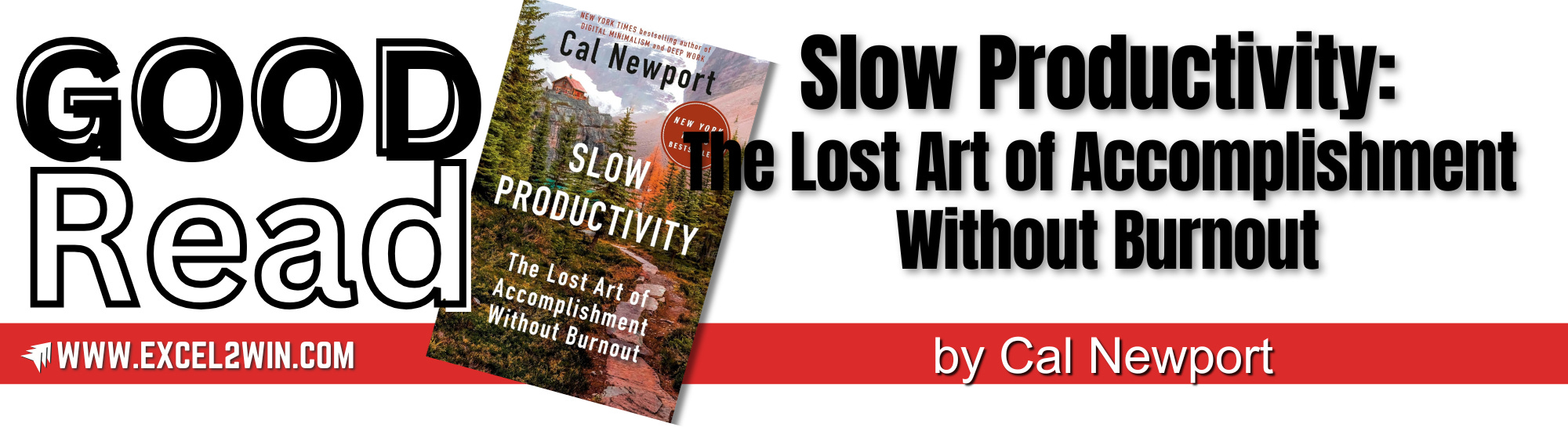
Slow Productivity: The Lost Art of Accomplishment Without Burnout
In a world where busy often feels like a badge of honor, Cal Newport’s Slow Productivity: The Lost Art of Accomplishment Without Burnout offers a refreshing and much-needed shift in perspective. Instead of glorifying constant hustle, Newport encourages professionals to rethink how meaningful work actually gets done. His message is simple but powerful: doing fewer things, focusing deeply, and allowing work to unfold at a sustainable pace leads to better results—and healthier careers.
Newport introduces three guiding principles: do fewer things, work at a natural pace, and obsess over quality. These ideas challenge the modern culture of endless meetings, notifications, and multitasking. By reducing overload and protecting focused work time, professionals can produce higher-quality results without sacrificing their well-being.
This idea connects closely with this week’s article on how leaders communicate calmly under pressure. When professionals aren’t overwhelmed by constant urgency, they can think more clearly, respond more thoughtfully, and communicate with greater confidence. Slowing down the pace of work doesn’t reduce performance—it improves clarity, decision-making, and leadership presence.
If you’re looking for a smarter, healthier way to accomplish meaningful work, this book is a powerful guide.
Consider adding Slow Productivity by Cal Newport to your reading list today, and subscribe to the EXCEL2WIN Leadership Newsletter for more practical insights to help you grow your leadership, focus, and career with intention.