“People grow most when they feel seen, not judged.” — Brené Brown.
Over the past few weeks in our Modern Leadership Skills That Matter Now series, we’ve been building a new picture of leadership. First, we explored what leadership looks like in a hybrid world, where clarity, trust, and intentional connection matter more than proximity. Then, last week, we talked about the shift from controlling to coaching—how great leaders develop people instead of managing every move.
Now we come to a moment that defines leadership more than most realize: feedback.
Because how you give feedback doesn’t just impact performance—it shapes trust.
The Reality Tension
Let’s be honest—most people don’t look forward to giving feedback.
You hesitate. You soften it too much. Or you avoid it altogether.
Why?
Because you don’t want to create tension. You don’t want to damage the relationship. And you definitely don’t want someone to shut down or get defensive.
So what happens?
You either say nothing… or you say it in a way that doesn’t land.
And that’s where most professionals get stuck.
Most people think feedback is about correcting behavior. But in reality, it’s about strengthening relationships.
When feedback creates fear, people protect themselves.
When feedback builds trust, people open up and grow.
A Personal Lesson That Changed My Leadership
Let me share something from my own leadership journey.
Early on, I gave feedback all the time. My managers did too. Some led with care and genuinely wanted to help their teams grow. Others believed in what they called the “unvarnished truth”: direct, blunt, and often hard to receive.
And I spent a lot of time coaching those managers to deliver feedback with more balance: still honest, but with intention and respect.
But here’s what’s interesting…
While I was focused on how others gave feedback, I wasn’t very open to receiving it myself.
When my leader gave me feedback, I took it personally.
I felt embarrassed.
I felt exposed.
I felt like I should have already known better.
Not because my boss was attacking me, but because that’s the mindset I had built around feedback.
And that’s where things began to shift.
I realized something important:
Feedback wasn’t the problem. My interpretation of it was. Hello?
When I stopped seeing feedback as criticism and started viewing it as coaching, everything changed.
My leader wasn’t against me; he was for me.
He wasn’t pointing out failure; he was developing capability.
And once I made that shift, I didn’t just grow; I was able to lead my managers at a completely different level.
The Shift That Changes Everything
Here’s the shift you need to make:
Feedback isn’t about being right; it’s about being helpful.
Think of it this way…
A fear-based approach says:
“I need to point out what’s wrong.”
A trust-based approach says:
“I want to help this person improve and succeed.”
Same situation. Completely different impact.
But this is where things begin to shift.
When your intention is growth, not judgment, your tone changes, your words change, and most importantly, the way your feedback is received changes.
Because people can feel the difference.
What Trust-Building Feedback Actually Looks Like
Let’s break this down into practical strategies you can use immediately.
1. Start with Context, Not Criticism
The fastest way to create defensiveness is to jump straight into what’s wrong.
Instead, start with purpose.
“I want to share something that can help you grow…”
“Can I offer some feedback that might strengthen this?”
This simple shift lowers resistance and signals that you’re on their side, not against them.
People don’t resist feedback. They resist how it’s delivered.
2. Be Specific, Not Personal
Vague feedback creates confusion. Personal feedback creates defensiveness.
Strong leaders focus on behavior, not identity.
Instead of:
“You’re not communicating well…”
Try:
“In yesterday’s meeting, a few key updates weren’t shared, which caused some confusion.”
Specific feedback gives people something they can actually work with.
3. Balance Honesty with Ownership
Here’s where many leaders either hold back—or come on too strong.
You need both honesty and responsibility.
Say what needs to be said, but own your intent.
“I may not have all the context, but here’s what I observed…”
“My goal here is to help you succeed…”
This keeps the conversation grounded and collaborative.
Honesty without care creates fear, and care without honesty creates confusion.
You need both.
4. Invite Dialogue, Don’t Just Deliver a Verdict
Feedback should never feel like a one-way conversation.
After sharing, pause.
Ask:
“How do you see it?”
“What’s your perspective?”
This does two things:
It shows respect
It builds ownership
Because now, they’re part of the solution, not just the recipient of criticism.
5. Reinforce Growth, Not Just Correction
Don’t end feedback with only what went wrong.
End with what is possible.
“I know you can improve this…”
“This is a great opportunity for you to grow…”
People need not only direction, but also belief.
When people feel supported, they’re far more willing to adjust and improve.
Reflection and Application
Let’s make this personal.
When you give feedback, do people lean in or pull back?
Are you more focused on being right, or being helpful?
Think about your last feedback conversation.
What could you have done differently to build more trust?
Because feedback isn’t just about what you say; it’s about what people feel when you say it.
Turning Feedback into Action
Think back to the opening idea: people grow when they feel seen, not judged.
That’s the standard.
In today’s workplace, where trust and connection matter more than ever, feedback is one of the most powerful tools you have. But only if you use it the right way.
Fear shuts people down.
Trust opens people up.
And great leaders know the difference.
So here’s your challenge:
This week, don’t avoid feedback—approach it differently. Choose one conversation and focus on being helpful, specific, and collaborative.
Start there.
And if you’re serious about becoming the kind of leader people trust and grow under, explore the EXCEL2WIN archives for more insights that will strengthen your leadership. And be sure to subscribe to the EXCEL2WIN Leadership Newsletter so you don’t miss what’s next.
Next week, we’re tackling a leadership tension every professional faces: how to create accountability without micromanagement.
And that’s where trust and performance truly come together.
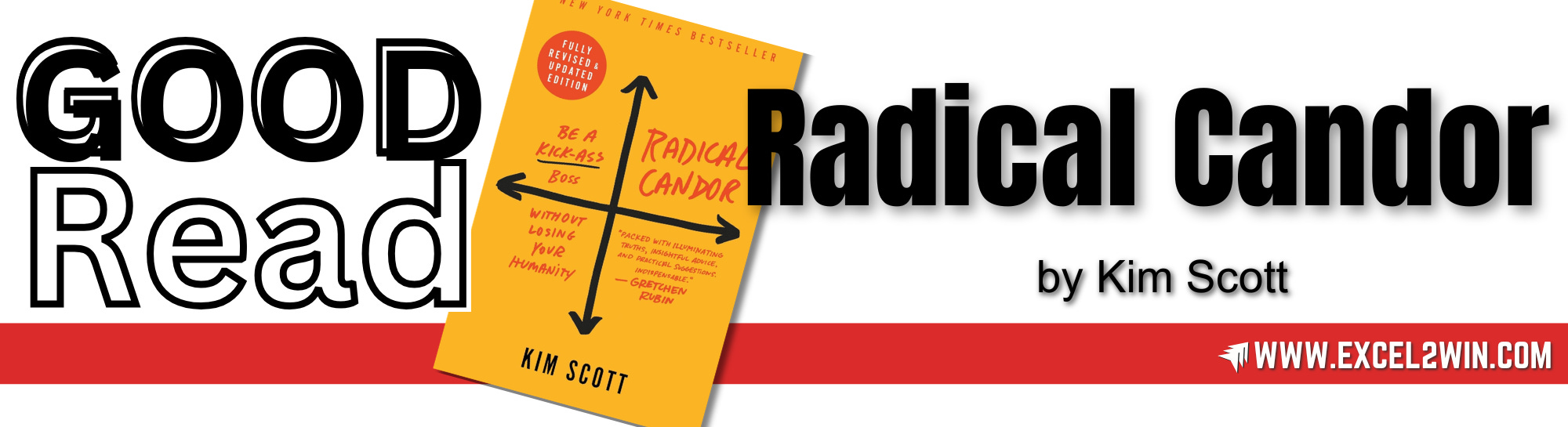
Radical Candor
There’s a fine line between being honest and being harsh—and most leaders struggle to find it. That’s exactly where Radical Candor by Kim Scott makes its impact.
Scott introduces a simple but powerful idea: the best leaders care personally while challenging directly. In other words, you don’t have to choose between being nice and being honest—you can be both. The book breaks down how to give feedback in a way that is clear, direct, and grounded in genuine care, making it immediately practical for everyday leadership.
And this connects directly to what we’ve been talking about—feedback that builds trust, not fear.
Too often, leaders either avoid feedback to keep the peace or deliver it in a way that creates defensiveness. Radical Candor shows a better path. When people know you care about them, they’re far more open to hearing what needs to change.
Because feedback isn’t just about correction—it’s about connection.
If you want to lead with honesty and build stronger, more trusting relationships, this book is a must-read.
Grab your copy today and take the next step in your leadership journey. And don’t forget to subscribe to The EXCEL2WIN Leadership Newsletter for more insights that help you grow, lead, and win.