



“My plate is full. I can’t do that.”
Early in my career, I struggled to say those words.
When my boss handed me a project, I took it on. Another responsibility? Yes. Something else that needed attention? I would find a way.
Then I took the work home. I spent countless hours trying to deliver on everything I had accepted. I wanted to prove I was capable and dependable.
Perhaps you recognize that pattern. Your calendar is packed, your regular responsibilities still need attention, and another assignment arrives. You agree before considering where the time will come from.
Eventually, I learned that accepting responsibility and managing responsibility require different skills.
Reality Check: Your Boss Needs the Full Picture
One conversation changed my thinking.
My boss explained that he would keep assigning projects to his managers until someone came back and said their plate was full. That was how he knew he had assigned too much.
That stayed with me. I had been waiting for him to recognize my limits while still accepting everything he handed me.
It taught me to make my workload visible. I began discussing what mattered to him, what I was already responsible for, and what could come off my plate when something new came on.
Your willingness to help needs honest communication about your capacity.
September’s leadership journey began with SEE: understanding how your work connects to the bigger picture. Last week, ANTICIPATE challenged you to look ahead. This week, CHOOSE asks you to use that perspective to decide what deserves attention.
Here are three ways to practice it.
1. Start With the Job You Already Own
I have often told my managers to understand their eight-hour-a-day job first.
What are you accountable for delivering? Which daily responsibilities keep your team functioning? Where are delays, repeated corrections, or inefficient routines consuming your time?
Learn the work. Improve how you do it. If you can responsibly recover an hour or two, you create room to contribute elsewhere.
That does not mean rushing through responsibilities or assuming every workload can be solved through efficiency. If the core job consistently exceeds your capacity, that deserves a conversation too.
Growth begins with being dependable in the responsibilities already entrusted to you.
2. Connect Priorities to Outcomes
A long task list tells you what is waiting. You still need to determine what matters most.
For each major commitment, ask: What company or team objective does this support? What happens if it slips? Who depends on it?
Think of it this way: a presentation for next month and a customer problem affecting today’s deliveries may both matter. Their consequences and timing help you decide the sequence.
Need help putting this into practice? Download the FREE EXCEL2WIN Strategic Leadership Framework and use the CHOOSE section of its weekly check-in. Write down your three most important priorities, then identify what you will deprioritize to protect them. Bring those notes into your next conversation with your manager.
3. Bring Your Boss a Choice
You do not need a lengthy defense of how busy you are. Bring a brief explanation of your commitments and a workable recommendation.
Suppose your manager requests a new analysis while you are completing a customer proposal and preparing your team’s weekly schedule.
You might say:
“I can take this on. The proposal is due Thursday, and the schedule needs to be ready tomorrow. If this analysis comes first, I recommend moving the proposal to Friday. Would that work, or should we arrange another owner?”
That conversation gives your manager something concrete to evaluate. Senior leaders may see priorities you cannot see. Your responsibility is to help them understand the commitments and consequences within your area.
Make One Deliberate Choice
Are you accepting work to advance an important outcome, or to avoid disappointing someone? Which existing commitment needs protection?
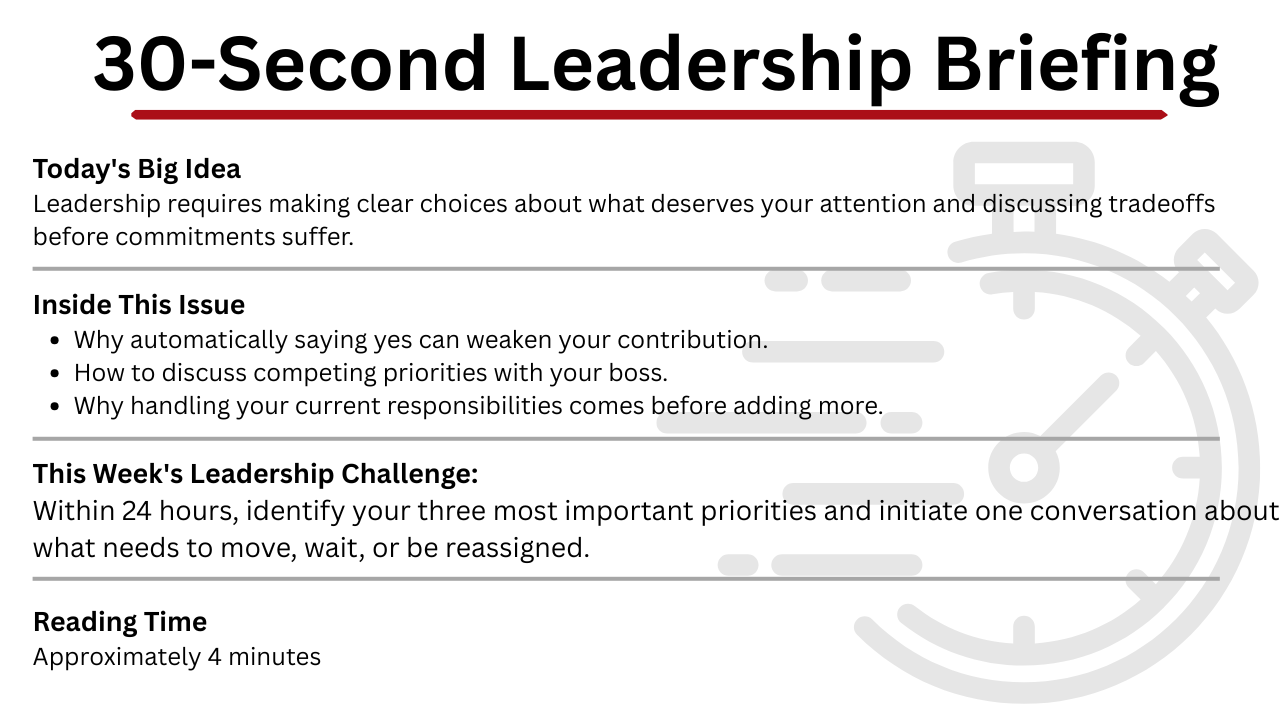
Within 24 hours, list your top three priorities and initiate one conversation about a necessary tradeoff. Bring the facts, explain the impact, and recommend a path forward.
You build credibility by making commitments people can count on.
Next week, we move to ALIGN: connecting those choices to a future your team understands and can work toward.

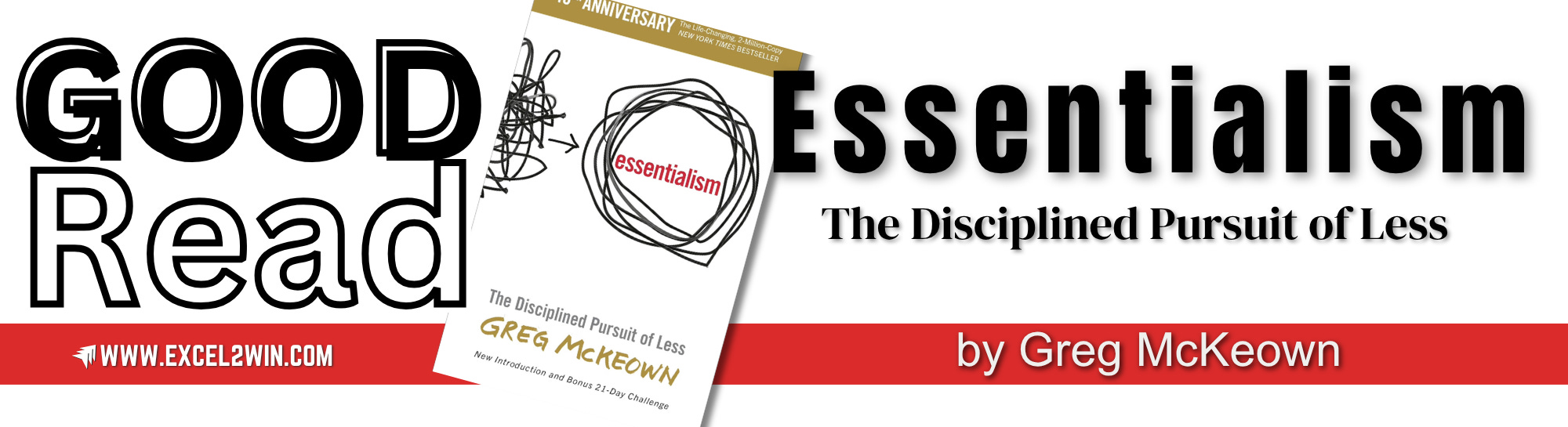
Essentialism: The Disciplined Pursuit of Less
Have you ever finished an exhausting day and wondered whether your most important work received any attention?
Greg McKeown’s Essentialism: The Disciplined Pursuit of Less speaks directly to that frustration. The book encourages you to examine your commitments, identify where you can make your strongest contribution, and create room for what deserves your energy.
McKeown organizes this practice around exploring what matters, eliminating nonessential commitments, and making essential work easier to accomplish. He examines the value of boundaries, thoughtful choices, and routines that reduce unnecessary friction. His message gives ambitious professionals permission to question the assumption that every opportunity deserves a yes.
That makes this a must-read for anyone whose desire to help has become a habit of overcommitting. You gain a practical way to evaluate requests before your calendar makes the decision for you.
In our article, “How to Prioritize at Work When Everything Feels Important,” we explored making workload visible and discussing tradeoffs with your manager. Essentialism deepens that lesson by helping you become more deliberate about the commitments you accept.
Your time can support meaningful progress when you give it clear direction.
Purchase Essentialism today, and subscribe to The EXCEL2WIN Leadership Newsletter for weekly encouragement and practical guidance


.