
“Leadership credibility is tested when the decision becomes uncomfortable.”
Years ago, one of my managers came to me with an idea.
Our customer service representatives followed a predetermined talk-off in a specific order. The process was established, consistent, and expected. My manager believed a different talk-off might improve the conversation and produce better results.
We discussed it and agreed to test it for a short period. I approved the test.
If it worked, we would present the results to senior leadership. If it did not, we would make adjustments, test it another week, and then decide whether it was worth presenting.
To me, it was a limited experiment.
Then senior leadership discovered what we were doing.
That is when the issue stopped being about the talk-off and became a leadership lesson I never forgot.
Challenging the Process Without Hiding From It
Most people think integrity at work means following the established process. But in reality, leadership sometimes requires you to question whether the established process is still the best one.
Processes matter. They create consistency, reduce unnecessary risk, and give people clear expectations. But no process should become untouchable simply because, “That’s how we’ve always done it.”
The real question is what you do when you believe there is a better way.
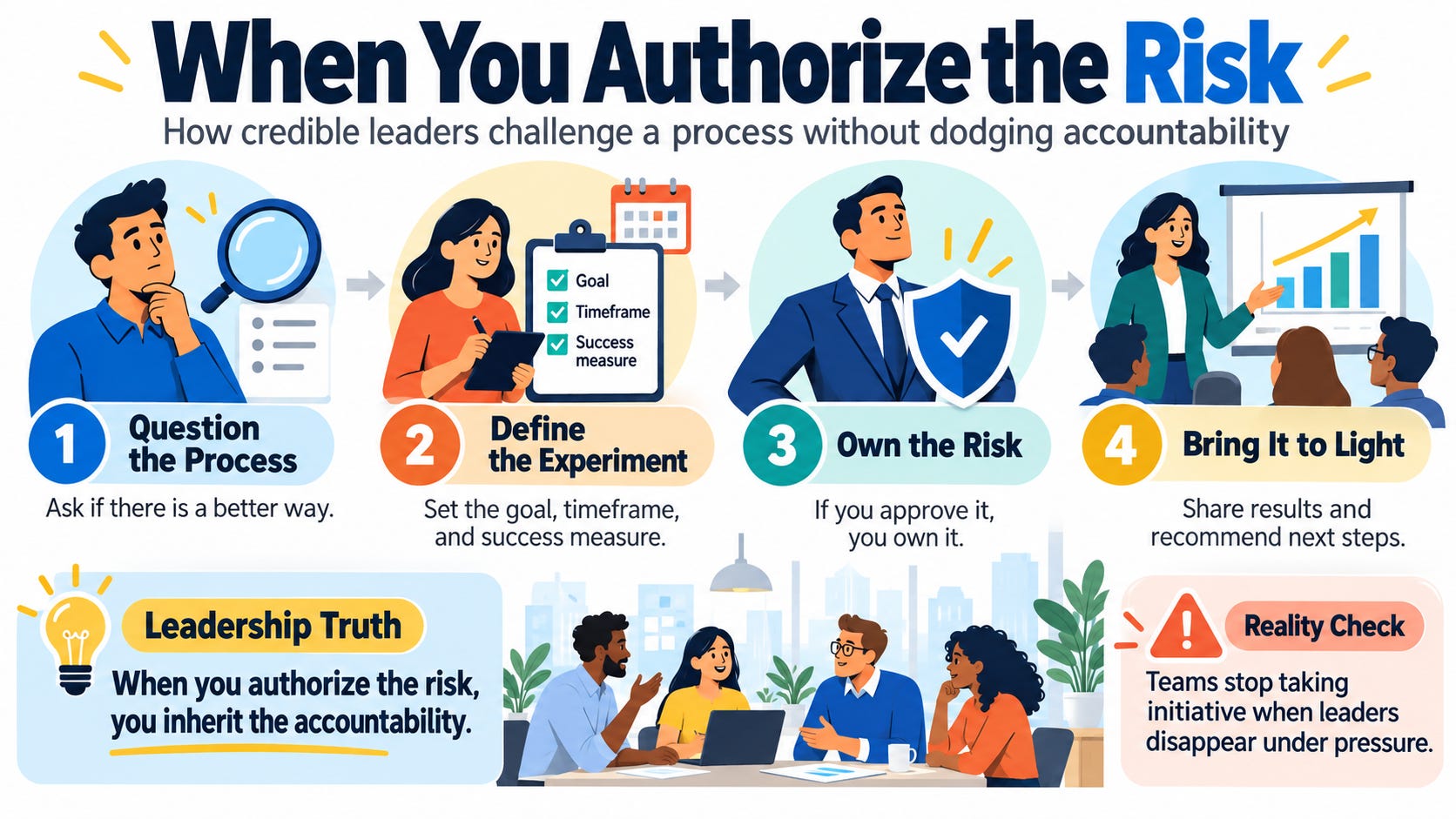
Think of it this way: responsible experimentation has an exit ramp. You test with a purpose, define what you are trying to learn, and eventually bring the results into the light.
That was our intention.
The test was temporary. The goal wasn’t to create a secret, permanent workaround. We wanted enough evidence to determine whether we had something worth presenting.
Reality Check: Approval Changes Everything
When senior leadership learned about the test, attention quickly turned toward my manager.
For me, there was no debate.
I had approved it.
My manager did not act independently. He brought me an idea; we discussed the risk, and I permitted him to move forward. If the decision had failed, ownership belonged to me as much as anyone.
Protecting my manager became my primary objective.
Not because leaders should shield employees from every consequence, but because you cannot authorize someone to take a risk and then distance yourself when the temperature rises.
Leadership Truth:
When you authorize the risk, you inherit the accountability.
Your team notices this more than you may realize.
If you encourage initiative when results are good but retreat behind policy when something goes wrong, people learn quickly. They stop bringing ideas. They wait for permission. They protect themselves instead of improving the work.
That is not always an employee engagement problem. Sometimes it is a leadership credibility problem.
Three Behaviors That Protect Your Credibility
1. Define the Experiment
Before approving a different approach, clarify what you’re testing, how long it will run, what success looks like, and when you’ll review it.
“Try something different” is not enough. Responsible risk needs boundaries.
2. Make Ownership Clear
If you approve the decision, say so plainly.
Your employee should never wonder whether you will remember that approval if someone higher up starts asking questions.
Leaders cannot borrow someone’s courage when things are going well and return it when things get uncomfortable.
3. Bring the Results Forward
A successful experiment should eventually become a transparent conversation.
Present what you tested, what happened, what you learned, and why the organization should consider changing the process.
Innovation loses credibility when it depends on staying hidden.
What Will Your Team See?
Ask yourself two questions.
When you tell your people to take initiative, have you made it safe for them to do so responsibly?
And if the decision becomes unpopular, will your ownership still be visible?
Those questions matter because leadership credibility is not built by always making the safest decision.
It is built when people know where you stand after the decision is made.
The 24-Hour Leadership Challenge
Look at one initiative currently moving forward with your approval.
Have a direct conversation with the person responsible. Clarify the boundaries, the intended outcome, and what part of the decision you own.
Do not wait until something goes wrong to establish accountability.
If you authorized the risk, make your ownership visible before anyone has to ask.
That is how credibility is built.
Next Week
Next week, we move from building credibility to making difficult decisions when pressure, competing priorities, and incomplete information make the right path harder to see.
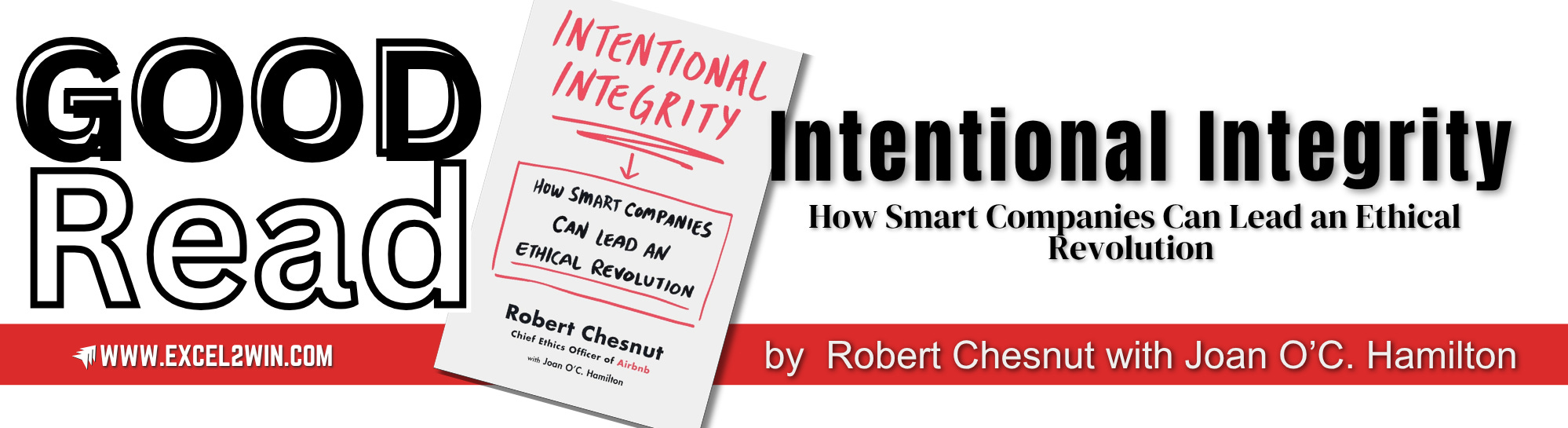
Intentional Integrity: How Smart Companies Can Lead an Ethical Revolution
In Intentional Integrity, Robert Chesnut, with Joan O’C. Hamilton, makes a compelling case that integrity should never be left to chance. Strong organizations do not simply publish values and hope people follow them. They build those values into decisions, expectations, conversations, and accountability.
Chesnut draws on real-world leadership experience to show why ethical cultures depend heavily on what leaders model when situations become uncomfortable. The book explores how companies can move beyond vague statements about “doing the right thing” and create practical standards that employees can actually understand and trust.
That message connects directly with this week’s EXCEL2WIN article. Challenging a process, testing a new idea, or encouraging innovation can be healthy leadership. But once a leader approves the risk, that leader also owns the responsibility that comes with it.
That is what makes Intentional Integrity such a valuable read. It encourages leaders to think ahead, clarify expectations, and create cultures where accountability is visible before problems arise.
If you want to lead with stronger judgment, greater credibility, and values your team can truly trust, add Intentional Integrity to your reading list.
Purchase the book from your preferred bookseller, and subscribe to The EXCEL2WIN Leadership Newsletter.