
Trust Is Not a One-Way Street
“Leadership is only as strong as the relationships that support it.”
I’ve believed that throughout my career, and after more than 45 years in leadership, I believe it even more today.
Leadership isn’t something you accomplish alone. Whether you’re managing five people or five hundred, your effectiveness depends largely on the relationships you build with those above you, those who report to you, and those working alongside you.
Throughout my career, I made those relationships a priority. I wanted senior leadership to understand what we were doing and why. Equally important, I wanted my managers and employees to understand our direction, expectations, and responsibilities.
We were all, as I often say, “read in.”
That shared understanding didn’t eliminate every challenge, but it certainly helped minimize unnecessary problems. When people know where you’re going, understand the expectations, and trust one another’s intentions, leadership becomes a partnership rather than a collection of individuals protecting their own interests.
But even strong partnerships can experience moments when someone misses the mark.
I know. I’ve been there.
When Initiative Gets Ahead of Communication
During my banking career, one of my managers proposed a different approach to a customer-service telephone script, what we called a “talk-off.”
The existing script followed an established sequence of conversations and procedures. My manager believed an alternative approach might produce better results.
I reviewed the idea and authorized a limited test.
I was confident in its potential. However, the proposed approach also raised questions about how it might influence customers’ decision-making. That deserved careful consideration.
When senior leadership questioned the change, I immediately acknowledged my responsibility.
No hesitation. No finger-pointing. No attempt to distance myself from the manager who developed the idea.
I had authorized the test. The responsibility was mine.
But I needed to address something else.
I had moved forward without first bringing my boss into the conversation.
Understand this: Encouraging innovation doesn’t mean disregarding policies, bypassing authority, or withholding information from those responsible for organizational oversight.
Even a promising idea must operate within ethical boundaries and established expectations.
My oversight wasn’t courageous risk-taking. It reminded me that confidence in your judgment doesn’t replace the responsibility to communicate.
An Apology That Strengthened a Partnership
After the matter surfaced, I pulled my boss aside and apologized for proceeding without his knowledge.
His reaction?
He laughed.
He accepted my apology, encouraged me to continue taking initiative, and offered one simple instruction: Next time, let him know first.
That conversation has stayed with me.
He didn’t discourage independent thinking or treat the situation as an opportunity to embarrass me. Instead, he reinforced an expectation while preserving the professional relationship.
And I respected him for it.
I had accepted responsibility, and he had responded with constructive leadership.
Neither of us needed a lengthy explanation or a contest over who was right. We understood the importance of maintaining our partnership.
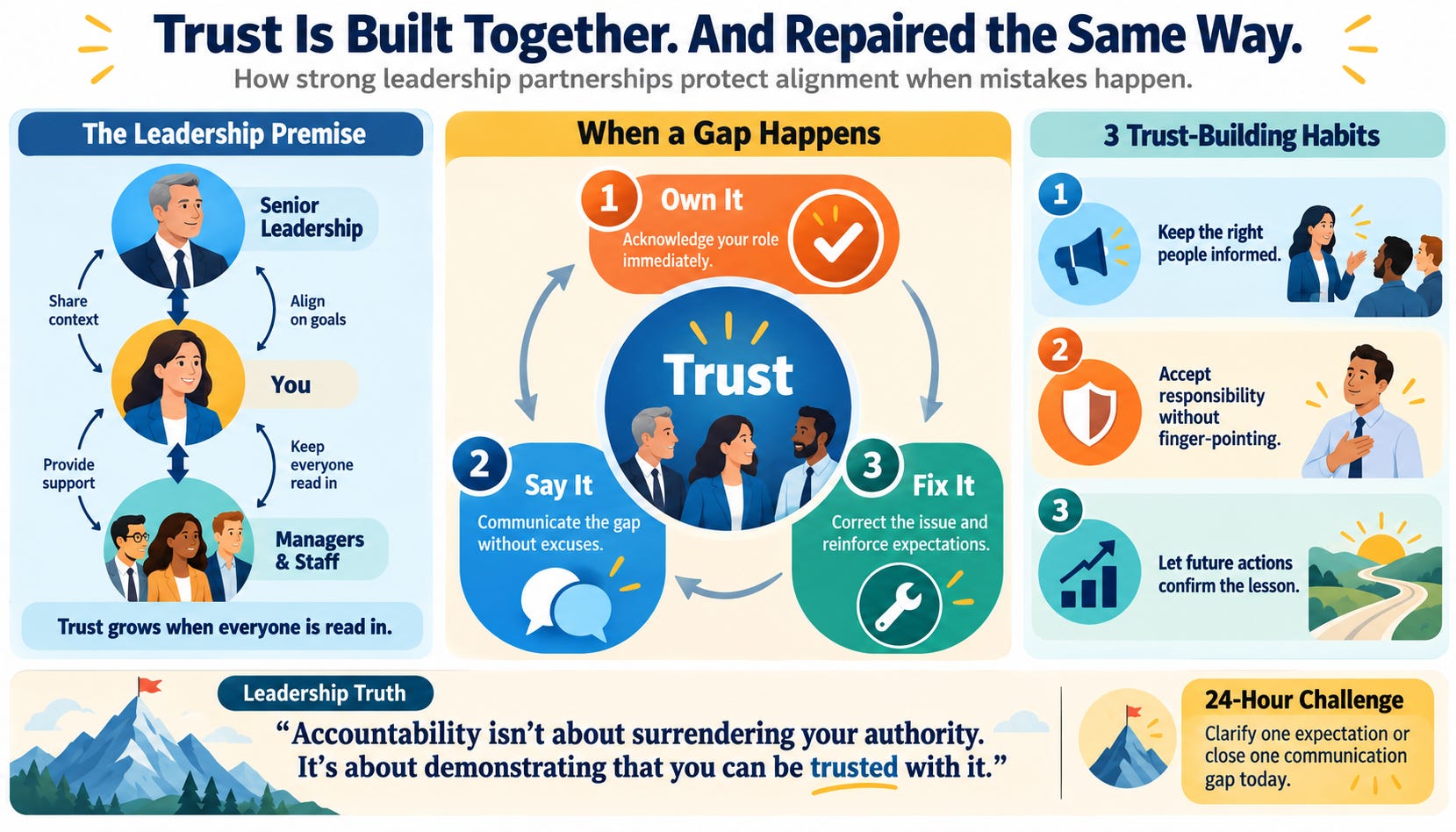
Accountability isn’t about surrendering your authority. It’s about demonstrating that you can be trusted with it.
There’s an important lesson here for leaders at every level.
An apology doesn’t automatically erase a mistake. Nor does an encouraging response from your boss make an oversight acceptable.
What matters is acknowledging what happened, understanding its impact, and ensuring your future actions reflect what you’ve learned.
Three Habits That Protect and Restore Trust
Trust requires intentional effort. Here are three practices worth developing.
1. Keep the Right People Read In
Don’t confuse independence with operating in isolation.
Before implementing an important change, identify who needs to know, who must approve it, and how it affects others.
Transparency isn’t a weakness. It’s how leaders maintain alignment.
2. Own the Gap Without Excuses
When you’ve made a mistake, acknowledge your part directly.
Don’t shift blame, minimize consequences, or hide behind good intentions.
You can explain your reasoning without using it to escape responsibility.
3. Let Your Next Actions Reinforce Your Words
Apologies begin repairing confidence. Consistent behavior sustains it.
Follow through on commitments, close communication gaps, and show you’ve taken the lesson seriously.
People need more than assurances. They need evidence.
The Leadership Legacy You Build
Throughout October, we’ve explored integrity, ethical judgment, consistency, and accountability.
These aren’t four independent leadership skills. They’re connected responsibilities that shape how others experience your leadership.
Integrity guides your decisions. Ethical judgment protects your organization and the people it serves. Consistency establishes credibility. Accountability protects relationships when judgment or execution falls short.
Together, they create the foundation for trust-based leadership.
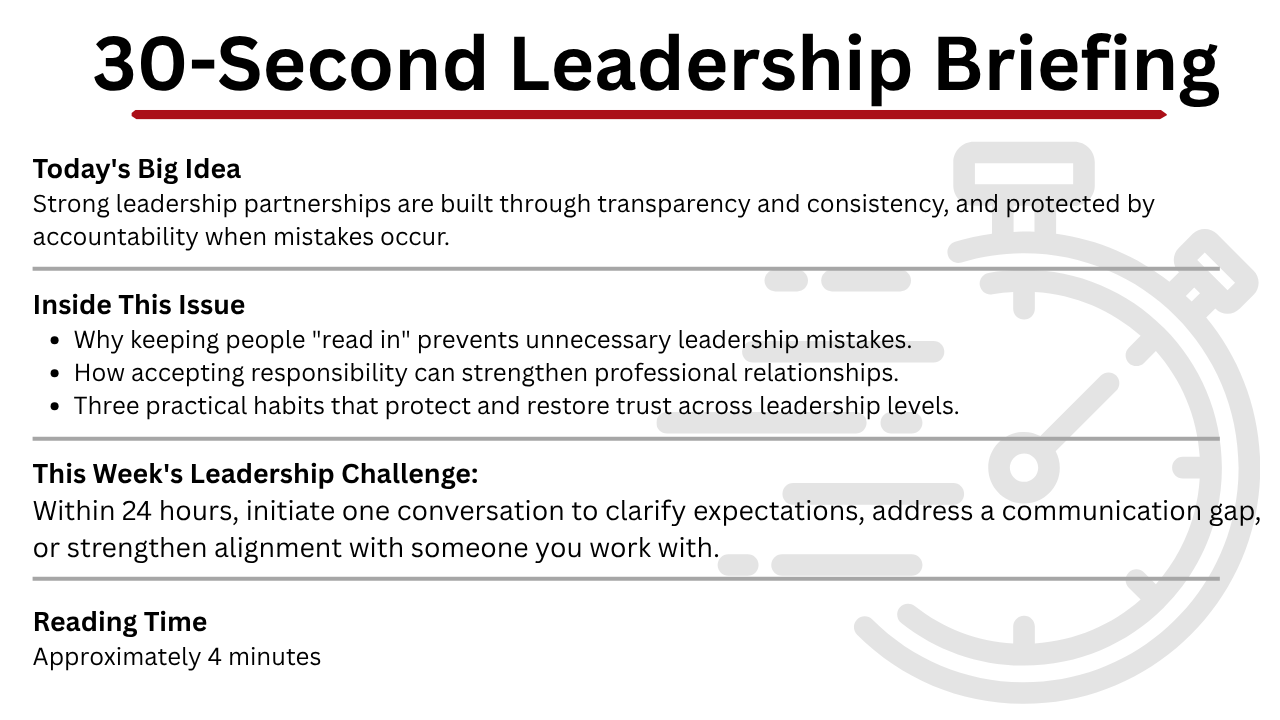
This Week’s Leadership Challenge: Within the next 24 hours, identify one relationship that would benefit from better communication or clearer expectations. Initiate that conversation. Don’t wait for a misunderstanding to force it.
And ask yourself: Do the people above and below me have the information they need to trust my decisions? When I miss the mark, do my actions make that trust easier or harder to maintain?
After 45-plus years, I’ve learned that strong leadership isn’t measured simply by how few mistakes you make.
It’s also measured by the partnerships you build, the responsibilities you honor, and the confidence others can place in you when things don’t go as planned.
Because trust is built together.
And when necessary, you repair it the same way.
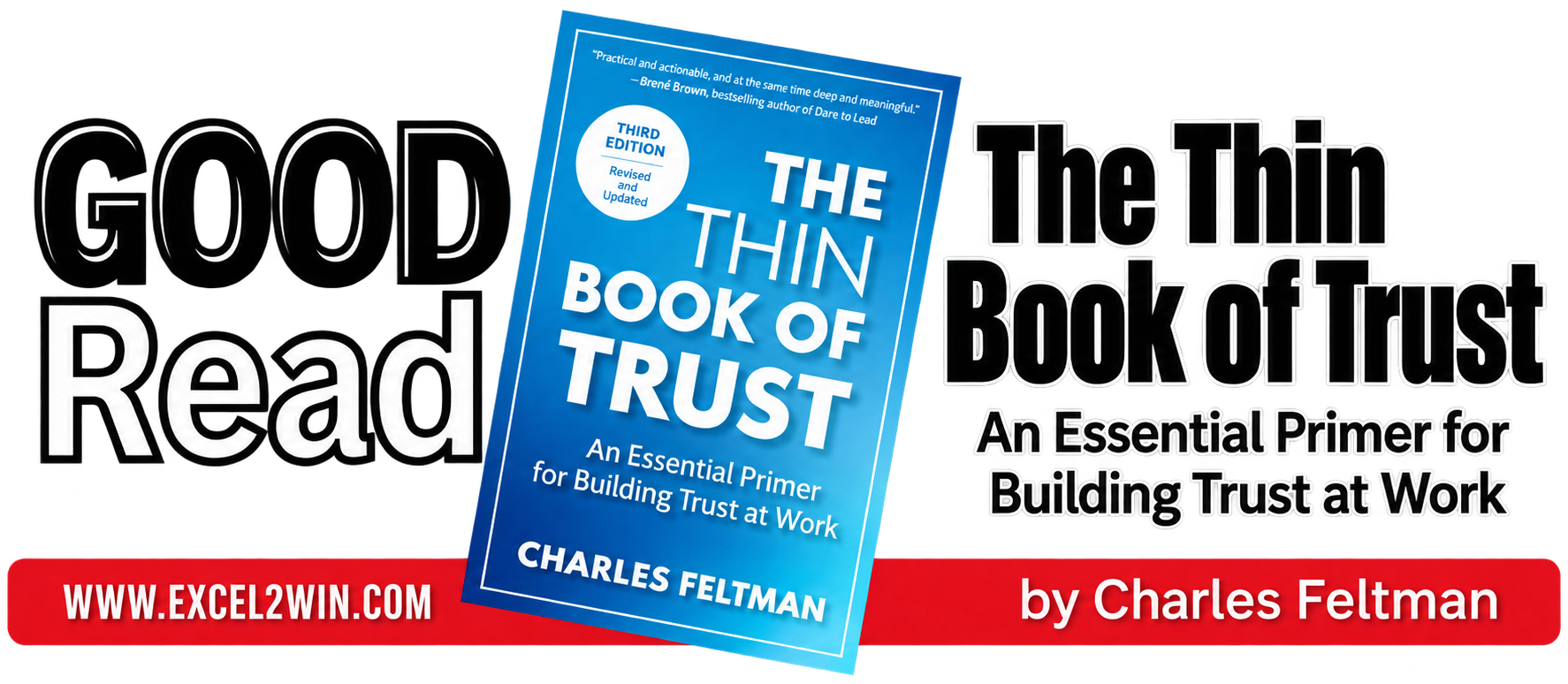
The Thin Book of Trust: An Essential Primer for Building Trust at Work
By Charles Feltman
What if the secret to stronger leadership wasn’t having all the answers, but becoming someone others can consistently trust?
In The Thin Book of Trust, Charles Feltman makes a compelling case that trust isn’t something we simply hope for. It’s something we intentionally build through everyday actions, conversations, and commitments.
Feltman identifies four essential elements of trust: sincerity, reliability, competence, and care. Together, they help us understand why people trust us, what causes that confidence to weaken, and how we can rebuild it when relationships are strained.
What makes this book especially valuable is its practicality. Feltman offers straightforward guidance for recognizing distrust, addressing difficult conversations, and restoring confidence without defensiveness or blame.
These lessons complement our EXCEL2WIN article, Trust Is Built Together. And Repaired the Same Way. Whether you’re communicating with senior leadership or supporting your team, strong partnerships require transparency, accountability, and consistent follow-through.
Short in length but rich in insight, this book reminds us that trust isn’t earned through titles or authority. It’s earned through behavior.
Ready to strengthen your leadership relationships? Purchase The Thin Book of Trust and subscribe to the EXCEL2WIN Leadership Newsletter for practical insights that help you lead with integrity and confidence.