“Trust is the glue of life. It’s the foundational principle that holds all relationships.” Stephen R. Covey
Early in my career as an executive, I hired a manager who impressed everyone. She was intelligent, experienced, articulate, and confident. During her first month, she held several team meetings, and I attended one. She knew the business, communicated clearly, answered questions confidently, and looked every bit the leader we had hired.
During our monthly one-on-one, I asked how she thought things were going.
“The team is performing,” she said, “but they still seem distant.”
I smiled and told her something I’ve never forgotten.
“Give them time. Trust isn’t built in meetings. It’s built between meetings.”
Over the next several months, I watched everything change. Conversations became easier. People laughed more. They challenged one another respectfully. Ideas flowed more freely. The energy inside the team noticeably changed.
Nothing about her competence had changed.
People had learned they could trust her.
That experience reinforced a lesson I’ve carried throughout my leadership career: people don’t follow leaders simply because they’re capable. They follow leaders because they believe those leaders genuinely have their best interests at heart.
That is the foundation of the EXCEL2WIN Leadership Trust Framework. Great leadership isn’t primarily about techniques. It’s about creating an environment where people feel valued, respected, challenged, and safe enough to do their best work. Everything else grows from that foundation.
Why This Matters Now
Today’s organizations don’t suffer from a shortage of talent.
They suffer from a shortage of trust.
When trust is missing, people hesitate to speak up. They avoid difficult conversations. They withhold ideas. Collaboration becomes guarded instead of genuine.
Most leaders respond by introducing more meetings, more processes, or tighter oversight.
But in reality…
Those things rarely solve a trust problem.
Trust isn’t a soft skill.
It’s the operating system of every healthy team.
When trust grows, communication improves. Accountability becomes natural. Engagement rises because people know they’re following someone who wants them to succeed, not simply someone who wants results.
Leadership is not measured by what people know about you. It’s measured by what people experience because of you.
Reality Check
Most people believe high-performing teams create trust.
In reality, trust creates high-performing teams.
Hello?
Performance is often the visible result.
Trust is the invisible cause.
Three Habits That Build Trust Every Day
1. Keep the Small Promises
Throughout my executive career, unexpected meetings had an uncanny way of appearing just minutes before I was scheduled to meet with one of my managers.
I always had a choice.
I could not show up.
Or I could stop by in person, explain what happened, apologize for the interruption, and immediately reschedule.
Most people would understand if you disappeared.
But trust isn’t built on understanding.
Trust is built because people know they matter.
Authenticity often speaks louder than perfect scheduling.
People rarely expect perfection.
They deeply appreciate sincerity.
2. Care Before You Correct
Before people accept correction, they first want reassurance that you’re invested in their success.
Imagine an employee who misses an important deadline.
One leader immediately focuses on the mistake.
Another begins by asking, “Is everything okay? This isn’t like you.”
Both leaders address performance.
Only one strengthens trust.
Feedback travels farther when it rides on a relationship built on genuine care.
3. Practice Unearned Trust
This may be the hardest leadership discipline you’ll ever develop.
Not because of the people you lead.
Because of the experiences you’ve survived.
Every experienced leader carries disappointments.
Broken promises.
Employees who took advantage of them.
Leaders who embarrassed them.
Moments that quietly taught them to protect themselves.
Those experiences become filters through which we judge everyone else.
The healthiest leaders learn to acknowledge those scars without allowing them to define every future relationship.
You cannot build a culture of trust while leading from a posture of self-protection.
Trust wisely.
But don’t stop trusting.
Leadership Truth
Every conversation either strengthens your leadership credibility or weakens it.
There is no neutral interaction.
Small moments create lasting cultures.
Workplace Application
Imagine two department managers leading teams with similar talent.
One micromanages every decision, rarely delegates meaningful work, and constantly verifies what people are doing.
The other establishes clear expectations, follows through on commitments, empowers people to solve problems, and coaches rather than controls.
Six months later, one team completes assignments.
The other willingly contributes ideas, collaborates openly, and consistently exceeds expectations.
The difference isn’t talent.
It’s trust.
Think of it this way…
People may work for your organization.
But every day they choose whether they’ll fully invest in your leadership.
Reflection
Ask yourself:
When people leave a conversation with me, do they feel more valued than when they arrived?
What one habit consistently strengthens, or quietly weakens, trust in my leadership?
This Week’s Leadership Challenge
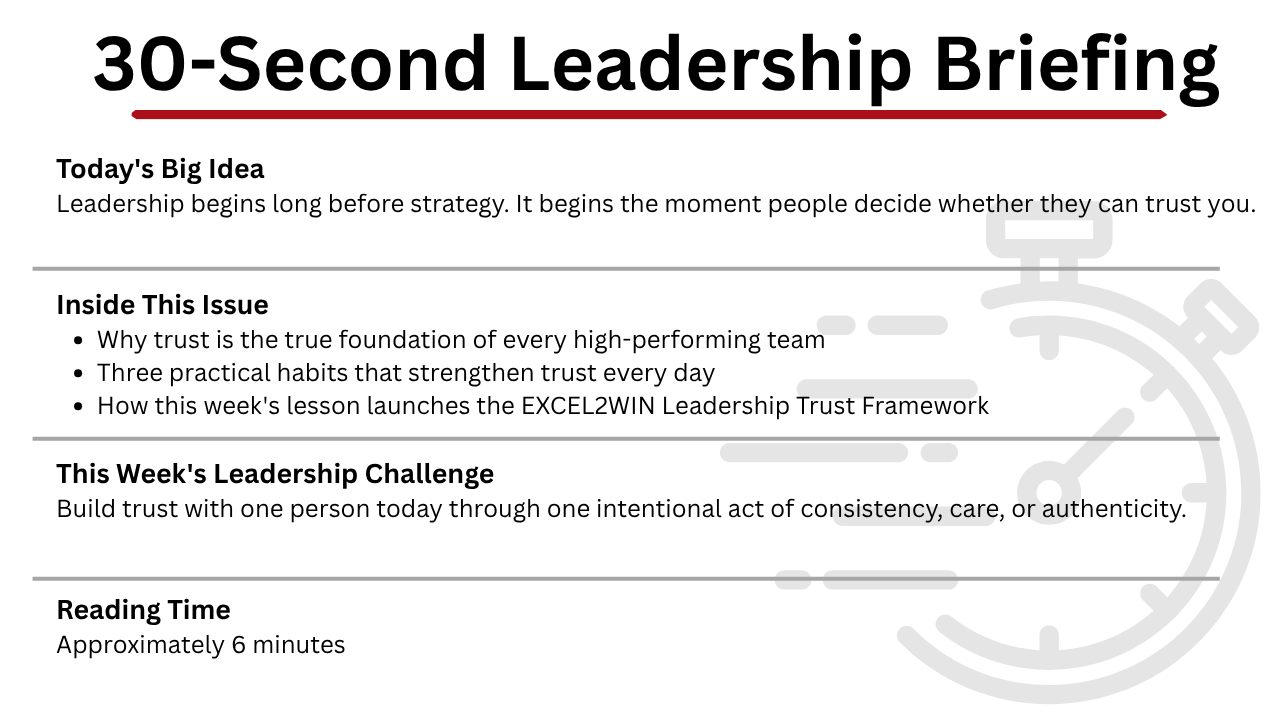
Before the next 24 hours are over, intentionally strengthen trust with one person.
Keep a promise.
Recognize someone’s contribution.
Have a conversation with no agenda except listening.
Or follow through on something you said you would do.
Small actions repeated consistently become the culture everyone experiences.
Leadership Resource of the Week
This month we’re introducing the EXCEL2WIN Leadership Trust Framework. This practical roadmap demonstrates how trust leads to a healthy emotional climate, stronger motivation, healthier conflict, psychological safety, and ultimately high performance. Keep it nearby throughout August as each week’s article builds upon the previous one.
Next Week
We’ll explore something every leader creates, whether they realize it or not.
The emotional climate.
You’ll discover why people often remember less about what you said and far more about how they consistently felt around you.
Join the Conversation
Who is one leader you’ve trusted deeply, and what specific behavior earned that trust?
I’d love to hear your story.
Leadership doesn’t begin with authority.
It begins the moment people believe you genuinely have their best interests at heart.
Build that belief…
…and everything else becomes possible.

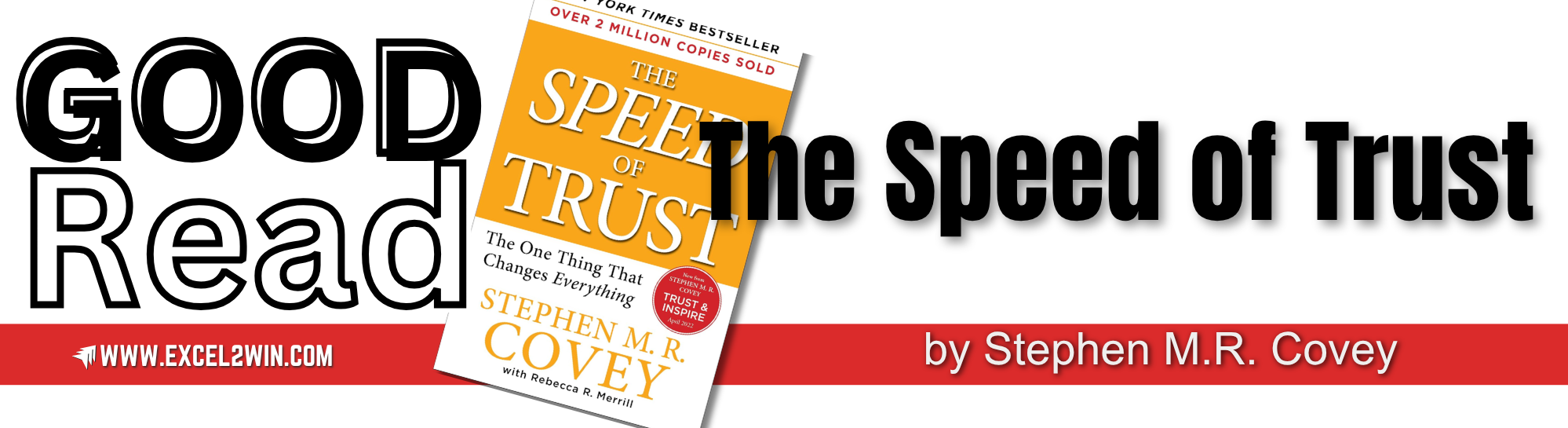
The Speed of Trust by Stephen M. R. Covey
If there is one leadership book that deserves a permanent place on every leader’s bookshelf, The Speed of Trust by Stephen M. R. Covey is it. Covey challenges the common belief that trust is merely a soft, intangible quality and demonstrates that it is one of the most practical and measurable drivers of organizational success. His central message is simple yet powerful: when trust increases, communication improves, collaboration accelerates, costs decrease, and results improve. Conversely, low trust creates friction, delays, and unnecessary complexity.
Covey introduces practical behaviors that help leaders intentionally build credibility, strengthen relationships, and create high-trust teams. Rather than treating trust as something that happens over time, he presents it as a leadership skill that can be developed through consistent actions and everyday choices.
That message aligns perfectly with this week’s EXCEL2WIN article. Trust is not built during one impressive presentation or a single team meeting. It is earned through keeping small promises, caring for people before correcting them, and creating an environment where others feel valued and respected. Great leadership begins when people believe you genuinely have their best interests at heart.
If you’re serious about becoming a leader people willingly follow, The Speed of Trust is an investment that will continue paying dividends throughout your career.
Purchase your copy of The Speed of Trust today, then subscribe to the EXCEL2WIN Leadership Newsletter for practical leadership insights and weekly strategies to help you build trust, strengthen your influence, and lead with lasting impact.