
“Here’s where we’re going, and here’s how you’re going to help.”
Walk through almost any workplace, and you will see activity. People are answering emails, attending meetings, preparing reports, and working through assignments.
But ask what all that effort is meant to accomplish, and sometimes the answer is simply, “I’m just doing my job.”
Over the years, that response has made me pause. It can signal a gap between the work people perform and the purpose they understand.
As a leader, I want to know whether people understand our goals and how their efforts contribute to solid results. A full schedule tells me very little about that.
Reality Check: Have You Made the Connection Clear?
Before you interpret disengagement as a poor attitude, consider what you have explained.
Does the person understand the outcome? Can they describe who benefits? Have you shown them why their particular contribution matters?
You may have explained the vision at the kickoff meeting. That does not mean everyone understood it, remembered it, or knows how to apply it when priorities compete.
A vision becomes useful when it helps someone decide what to do next.
This is where September’s leadership journey comes together. We began by learning to SEE the bigger picture, then ANTICIPATE what is coming and CHOOSE what deserves attention. Now we ALIGN: connect today’s work to tomorrow’s destination.
Here are three practices that make that connection real.
1. Describe the Destination in Their Language
When I begin a project, I try to explain the result we want in terms the people doing the work understand. Their language matters.
“Improve operational excellence” may sound impressive. For someone handling customer requests, a clearer explanation might be: “We want customers to get an accurate answer the first time, without being transferred between departments.”
Now the destination is something people can picture.
Explain what will be different when the work succeeds, who will benefit, and why it deserves their effort. Then invite questions. Ask, “What would that look like in your part of the work?”
Their answers will reveal connections you still need to clarify.
2. Show Each Person How Their Work Contributes
People want to be part of something meaningful. Help them see where they fit.
Imagine asking a colleague to update a shared customer guide. Explain that accurate information will help teammates answer questions consistently and spare customers the frustration of repeating themselves.
Then make the contribution specific: “Your experience with these requests will help us identify the five answers that need correcting first.”
That conversation connects the destination, the person’s strengths, and a practical next step.
You can practice this without a leadership title. Ask your manager which outcome an assignment supports. Consider where your strengths can help and where you need guidance. Share that connection with the colleague working beside you.
3. Keep the Goal Visible and Recognize Progress
I make a point of revisiting goals while a project is underway. People need encouragement and reminders as daily demands compete for attention.
Recognition belongs throughout the process. Name the contribution and its effect: “You clarified those instructions, and that helped the next department complete the handoff without sending it back.”
Specific recognition shows people what progress looks like and which behaviors are worth repeating.
If activity increases but results stall, revisit the obstacles together. The team may need clearer priorities, better support, or a different approach.
People need to see that their effort is taking them somewhere.
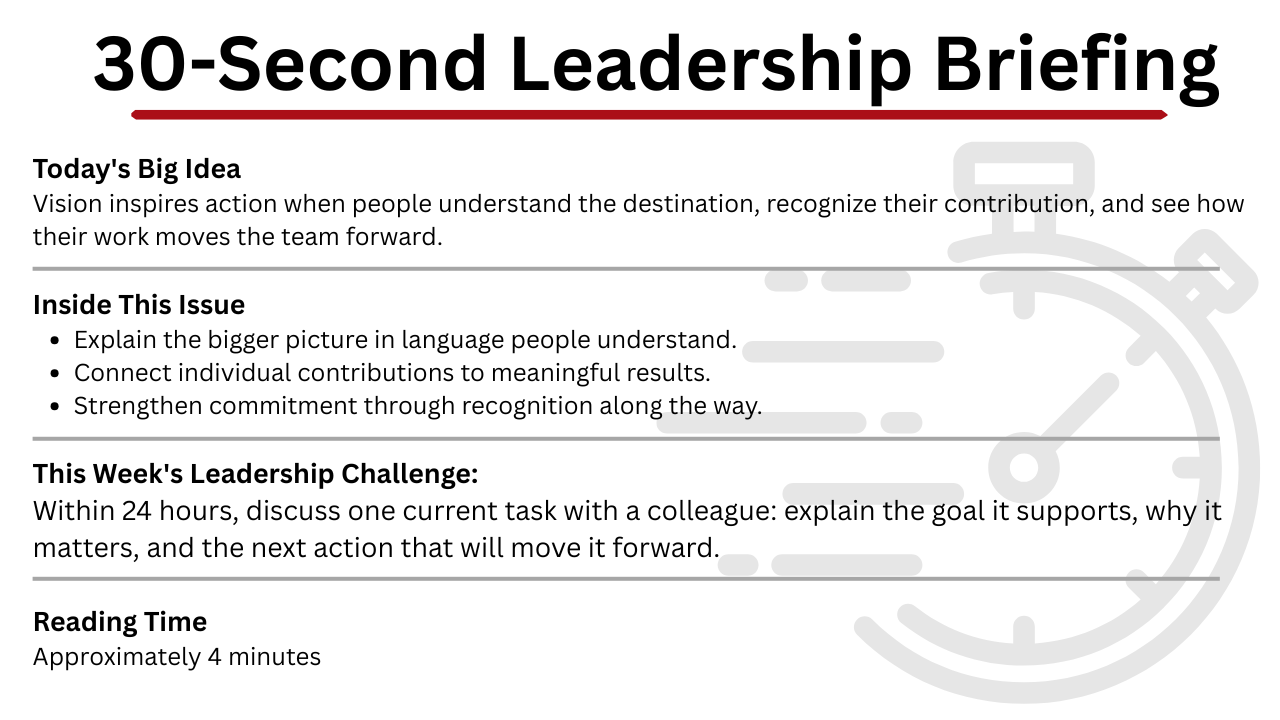
Your Leadership Challenge
Ask yourself: Can I explain how my current work supports our larger goal? Have I helped someone else understand their contribution?
Within 24 hours, have that conversation with one colleague. Name the goal, explain why the task matters, and agree on one useful next action.
Download your free EXCEL2WIN Strategic Leadership Framework and use the ALIGN questions to prepare for your next conversation. Keep it handy as a reference for your weekly check-ins while you continue practicing all four habits: SEE, ANTICIPATE, CHOOSE, and ALIGN.
As September closes, carry all four habits forward: see the connections, anticipate what is coming, choose what matters, and align people around the destination.
Start with the work in front of you. Make its purpose clear enough that someone can act on it today.

The Vision Driven Leader
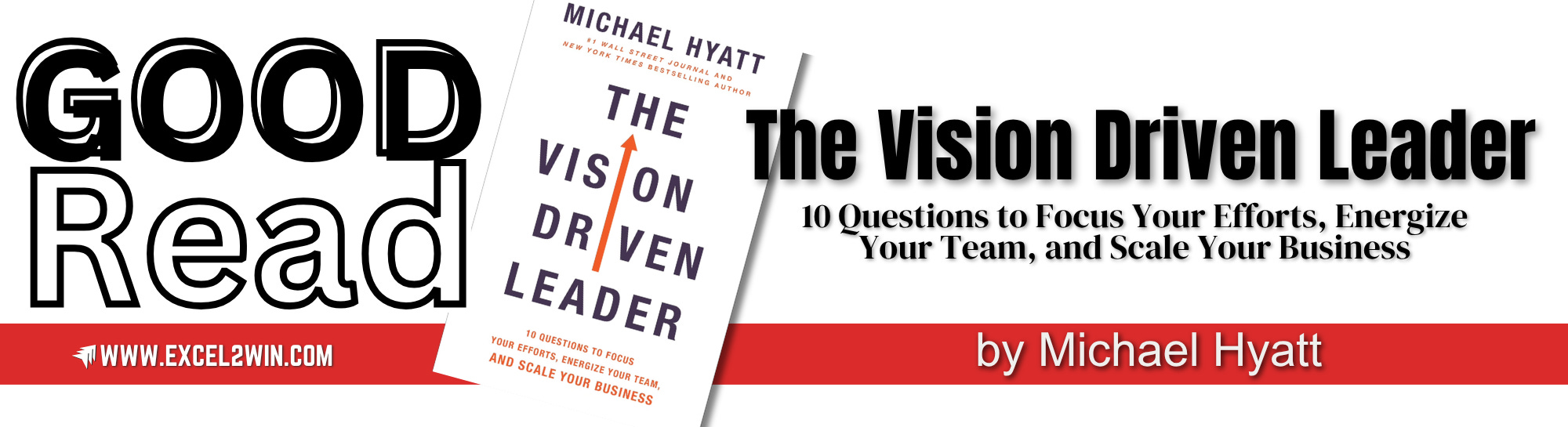
You can fill a calendar with meetings and still leave your team wondering where it’s going. Michael Hyatt’s The Vision Driven Leader invites you to pause and give that question the attention it deserves.
Built around ten questions, the book guides leaders toward a clear, compelling picture of the future. Hyatt explores how vision focuses effort, energizes people, and supports organizational growth. His practical approach encourages you to articulate a destination that can guide decisions and give your team something meaningful to pursue.
What makes this book worth reading is its invitation to do the thinking leadership requires. You’re encouraged to examine where you’re headed and whether the people traveling with you understand the direction.
That connects with this week’s article, “Vision Casting That Inspires Action.” Explaining goals in familiar language and showing people how their contributions matter helps bring that future into everyday conversations.
For emerging leaders, the opportunity is encouraging: start practicing wherever you have responsibility. Consider one project. What would success look like, and can everyone involved explain it?
Give your leadership a clearer direction. Purchase The Vision Driven Leader today, and subscribe to The EXCEL2WIN Leadership Newsletter for practical encouragement to turn purposeful thinking into action

.