“Leadership is not about being in charge. It is about taking care of those in your charge.” — Simon Sinek.
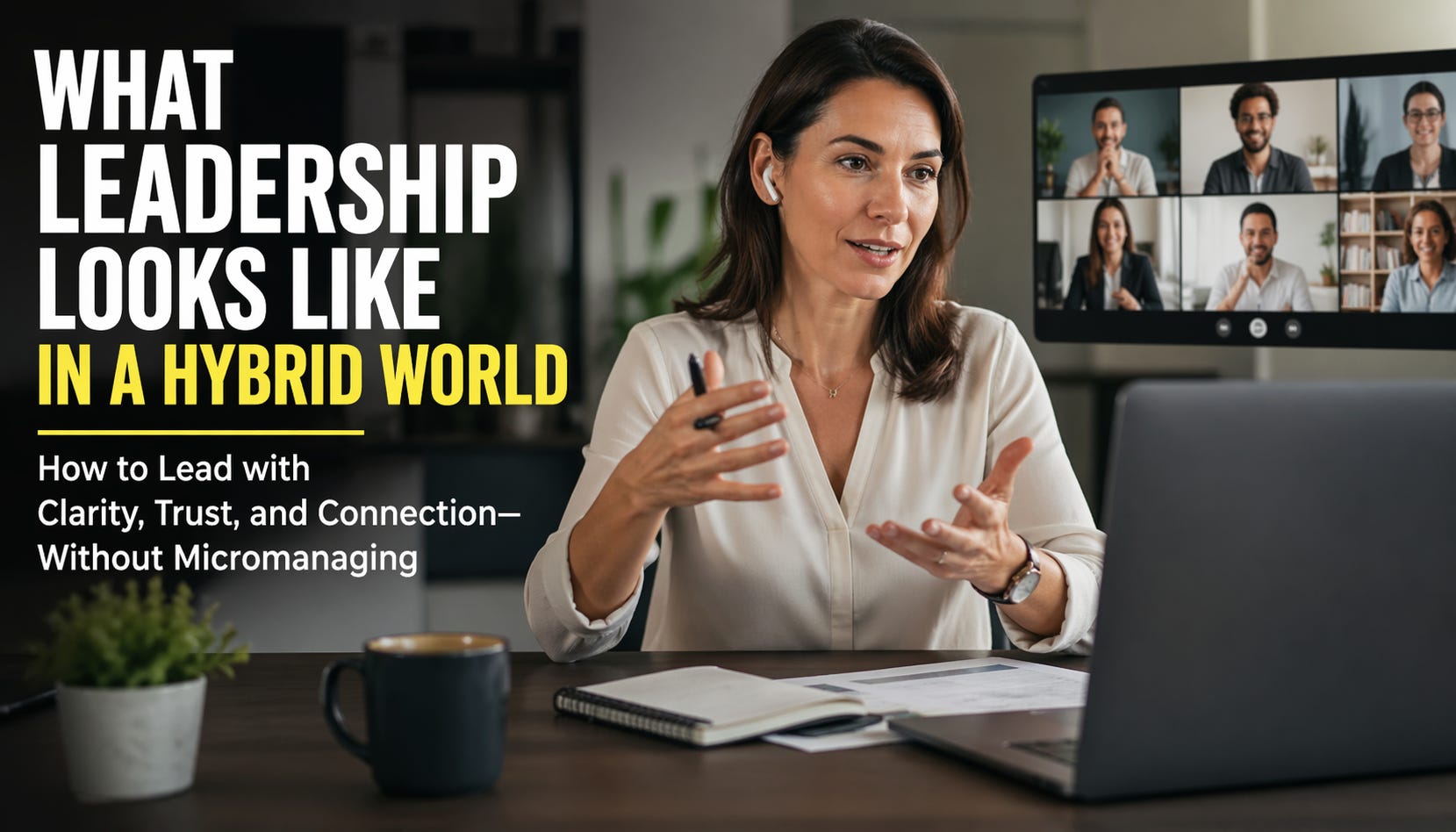
You’re on a team call. Half the group is in the office conference room, the other half is dialing in from home. Cameras are off. A few voices dominate the conversation. You end the meeting wondering: Did everyone feel included? Did we actually move forward?
Welcome to leadership in a hybrid world.
This May series, Modern Leadership Skills That Matter Now, is built for the realities you’re navigating every day: flexible schedules, distributed teams, and rising expectations. Over the next few weeks, we’re going to challenge how you think about leadership and give you practical tools to lead with clarity, trust, and effectiveness. And it starts here.
The Reality Tension
Hybrid work didn’t just change where we work; it changed how we work. It changed how leadership is experienced.
Most professionals assume leadership is about maintaining visibility, being seen, being active, and being responsive. But in reality, hybrid environments expose a deeper truth: visibility without connection is empty.
And that’s where most professionals get stuck.
You may think you’re leading because you’re checking in, sending updates, and running meetings. But your team may feel disconnected, unclear, or even overlooked.
Distance doesn’t weaken leadership. Poor adaptation does.
The Shift That Changes Everything
Most people think leading remotely requires more control, more check-ins, more oversight, more structure.
But in reality, the best hybrid leaders do the opposite.
They build clarity, trust, and intentional connection.
Here’s the simple truth:
Leadership is no longer about proximity. It’s about presence. Hello?
Think of it this way. In a traditional office, leadership could rely on physical cues, body language, hallway conversations, and quick clarifications. In a hybrid world, those cues are gone.
So you have to replace them with something stronger: intentional leadership behaviors.
But here’s where things begin to shift.
When you stop trying to “replicate the office” and start designing how leadership actually works now, everything improves communication, engagement, and performance.
What Effective Hybrid Leadership Actually Looks Like
Let’s break this down into practical strategies you can use immediately.
1. Lead with Clarity, Not Control
In a hybrid environment, ambiguity spreads fast.
If your team isn’t clear on expectations, priorities, or outcomes, they will fill in the gaps and not always correctly.
Strong leaders don’t hover. They clarify.
Be explicit about:
What success looks like
Who owns what
When things are due
Then step back.
Micromanagement isn’t a leadership strategy. It’s a trust issue in disguise.
Clarity creates confidence. Control creates resistance. Hello?
2. Make Connection Intentional
In-office environments create natural connection points. Hybrid environments don’t.
If you don’t create a connection on purpose, it won’t happen.
This doesn’t mean forcing awkward “team bonding” sessions. It means being intentional about human interaction.
Start meetings with quick personal check-ins.
Schedule occasional one-on-ones that aren’t task-driven
Acknowledge wins publicly, even small ones
People don’t disengage because they’re remote. They disengage because they feel invisible.
And as a leader, that’s your responsibility to solve.
3. Redefine Visibility
Many young professionals worry about being “seen” in a hybrid environment.
But here’s the shift: visibility isn’t about being online all day. It’s about being valuable when it counts.
Encourage your team—and model it yourself- to focus on:
Delivering consistent results
Communicating progress proactively
Speaking up with ideas and solutions
You don’t need constant activity. You need a meaningful contribution.
And as a leader, recognize and reward impact—not busyness.
4. Build Trust Through Outcomes
Hybrid leadership exposes a critical question: Do you trust your team?
Because if you don’t, it will show.
You’ll overcheck, overcorrect, and overmanage. And your team will feel it immediately.
Instead, shift your focus from monitoring activity to measuring outcomes.
Set clear goals. Align on expectations. Then let people execute.
Trust is not built through surveillance. It’s built through consistency and follow-through.
When people know they are trusted, they perform differently.
Reflection & Application
Let me ask you a couple of questions:
Are you leading your team based on visibility… or actual impact?
Where might you be holding on to control instead of building clarity and trust?
Take a moment and be honest with yourself.
Because hybrid leadership doesn’t require you to do more. It requires you to lead differently.
Leading Forward: Your Next Steps
Leadership in a hybrid world isn’t about mastering technology or managing schedules. It’s about mastering trust, clarity, and connection in an environment where none of those happen by accident.
Think back to the opening idea: taking care of those in your charge.
In today’s workplace, that means being intentional about how your leadership shows up, especially when you’re not in the same room.
So here’s your challenge:
This week, choose one area: clarity, connection, visibility, or trust- and improve it deliberately. Don’t try to fix everything. Just move one step forward.
Then build from there.
And if you’re serious about growing as a leader, take time to explore the EXCEL2WIN archives for deeper insights and practical strategies that will help you lead with confidence in today’s evolving workplace. And make sure you subscribe to the EXCEL2WIN Leadership Newsletter so you don’t miss what’s coming next.
Because next week, we’re going to tackle a shift that separates average managers from exceptional leaders: the difference between coaching and controlling—and why one builds teams while the other breaks them.
And trust me, that’s a conversation you don’t want to miss.
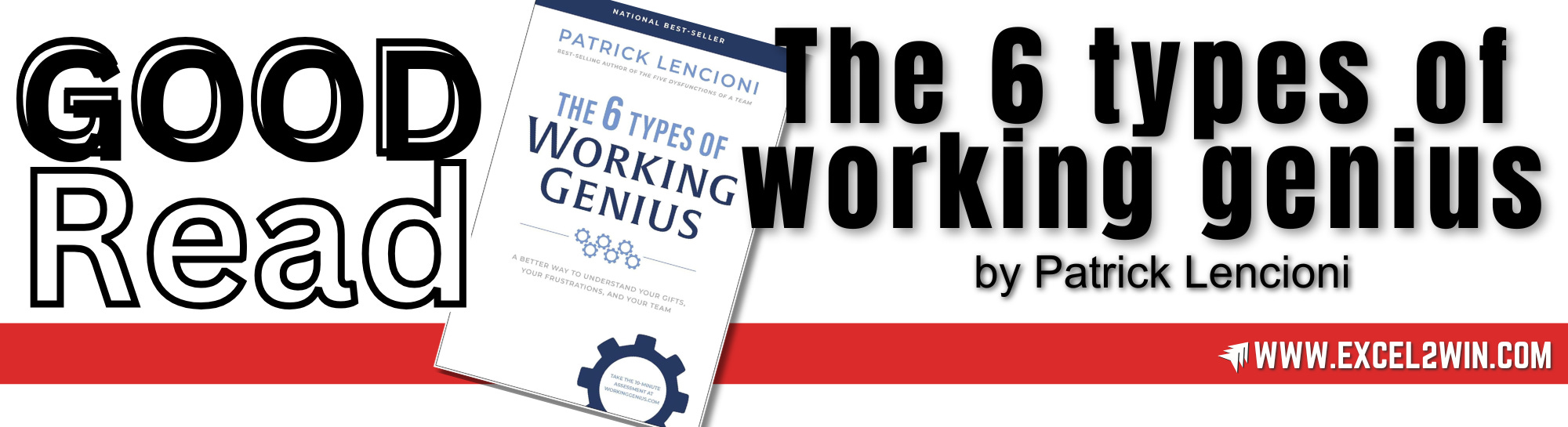
The 6 Types of Working Genius
There’s a moment every leader faces—when the issue isn’t effort, but alignment. The work is getting done, but something feels off. Energy is low, collaboration feels forced, and progress requires constant pushing. That’s exactly where The 6 Types of Working Genius by Patrick Lencioni steps in.
Lencioni introduces a simple but powerful framework that helps you understand how people are naturally wired to contribute at work. Whether it’s generating ideas, evaluating options, or executing plans, each person brings a unique type of genius—and frustration often comes from working outside of it. The book breaks this down into six types, giving leaders a practical way to align roles, improve collaboration, and unlock performance.
And here’s where it connects directly to hybrid leadership.
In a world where you can’t rely on proximity or constant oversight, clarity becomes everything. When you understand how your team works best, you stop micromanaging and start leading with intention. You build trust faster. You create connection without forcing it.
Because leadership isn’t about doing more—it’s about positioning people to thrive.
If you’re ready to lead with clarity and confidence, this book is a must-read.
Grab your copy today and take the next step in your leadership journey. And don’t forget to subscribe to the EXCEL2WIN Leadership Newsletter for more insights that help you grow, lead, and win.