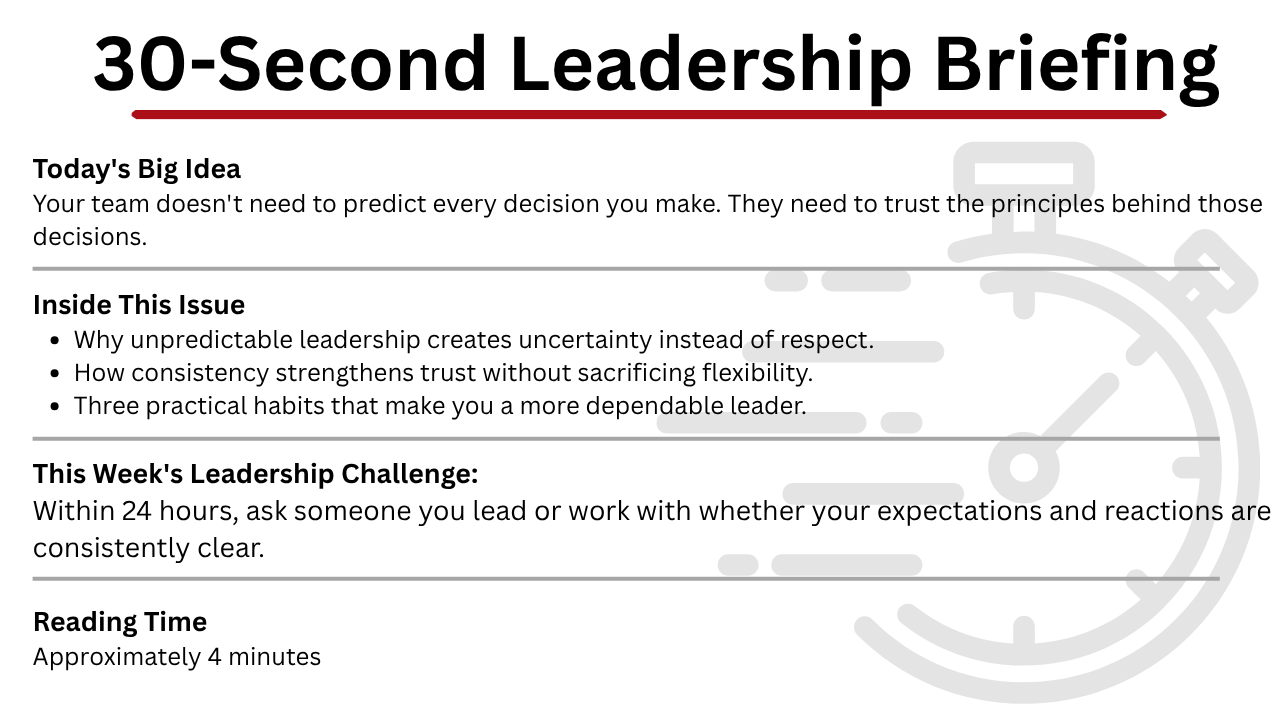

The Leader Nobody Could Figure Out
“Your team shouldn’t have to spend more energy figuring you out than doing their jobs.”
Have you ever worked for someone whose personality seemed to change day to day?
On Monday, they welcome your ideas. On Tuesday, they criticize you for taking initiative. By Wednesday, you wonder whether to make a decision or wait for permission.
Sound familiar?
I’ve worked alongside leaders who believed unpredictability was a strength. One colleague actually took pride in being difficult to figure out. His approach was sometimes covert, leaving managers confused about expectations and, at times, unsure who was responsible when things went wrong.
I never understood the attraction.
Over my leadership career, I took a different approach. I wanted my managers and employees to know where they stood with me. They didn’t have to guess how I would respond or wonder whether yesterday’s expectations still applied today.
Employee survey feedback often reflected that I was easy to work for.
But don’t confuse that with being easy to take advantage of.
Standards existed, responsibilities to fulfill, and consequences when expectations weren’t met. The difference was that people knew what those expectations were.
Reality Check: Unpredictability Is Not Authority
Some leaders believe keeping employees guessing strengthens their position. They confuse uncertainty with control and fear with respect.
But think about what happens when employees cannot predict how their leader will react.
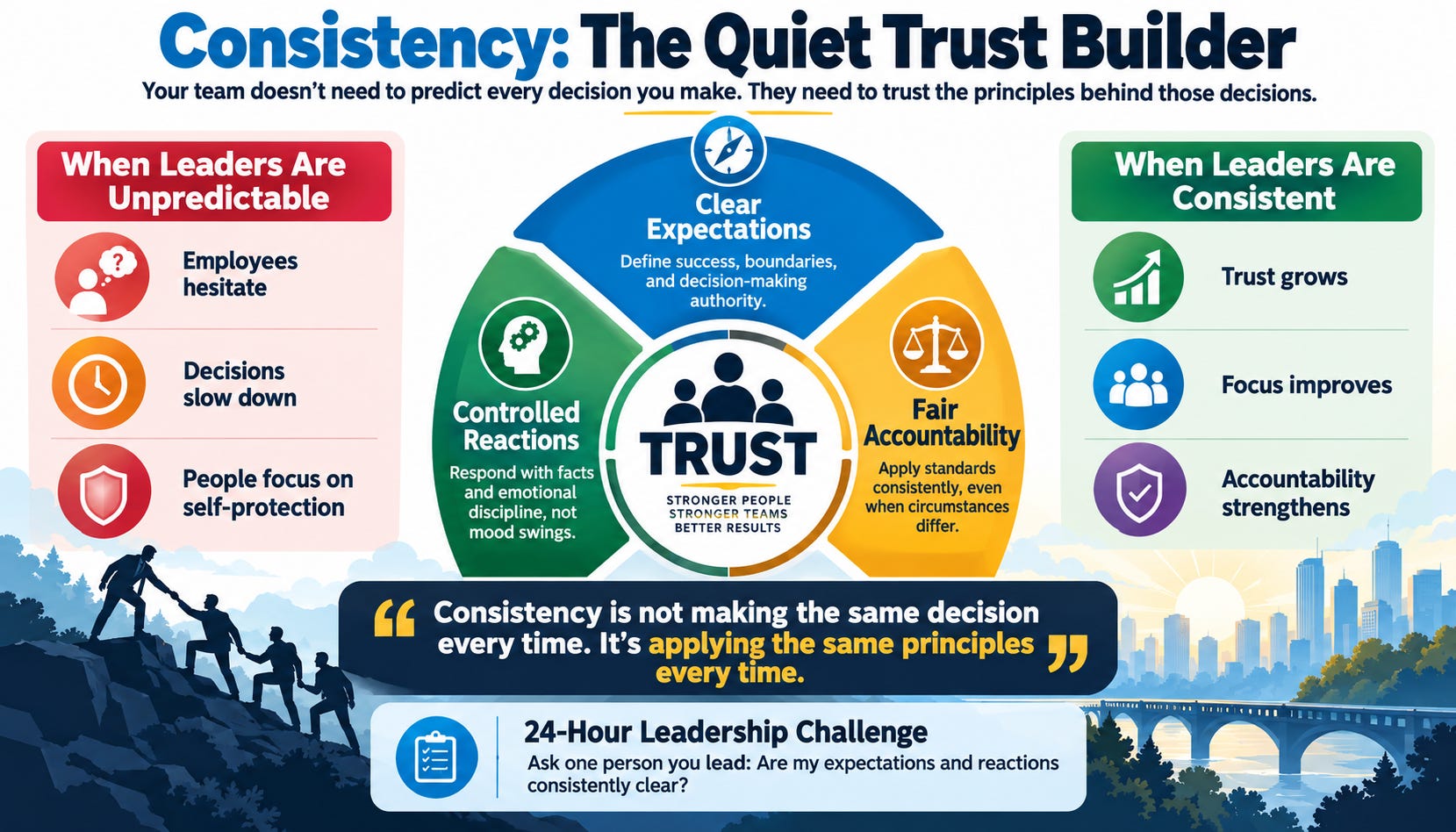
They hesitate before speaking up. They second-guess routine decisions. They spend valuable time managing personalities instead of solving problems.
That’s not leadership effectiveness. That’s unnecessary friction.
The strongest leaders aren’t necessarily the most predictable in their decisions. They’re the most dependable in their principles.
Consistency creates an environment where employees can concentrate on performance rather than self-protection.
And here’s something worth remembering: People may comply with an unpredictable leader, but compliance and trust are two different things.
Consistency Doesn’t Mean Rigidity
Let’s clarify something important.
Being consistent doesn’t mean every employee receives identical treatment or every situation produces the same decision.
Circumstances change. People face different challenges. Sometimes flexibility is precisely what good leadership requires.
Imagine two employees missing the same deadline. One repeatedly ignores expectations. The other encounters an unexpected family emergency after years of dependable performance.
Should both situations receive identical responses?
Of course not.
The consistent leader considers the circumstances while applying the same underlying principles: fairness, accountability, honesty, and sound judgment.
Consistency is not about repeating decisions. It’s about staying faithful to the standards that guide those decisions.
That distinction separates thoughtful leadership from rigid management.
Three Habits That Build Dependable Leadership
1. Make expectations unmistakably clear.
Don’t assume employees understand what success looks like.
Explain the outcome, the deadline, the boundaries, and where they have decision-making authority.
When expectations change, communicate why. Employees shouldn’t discover new rules only after violating them.
2. Manage your reactions before managing others.
Everyone experiences frustration, pressure, and disappointing results. Leadership doesn’t exempt you from emotions.
But your team shouldn’t bear the consequences of whatever mood you brought into the office.
Before responding to a mistake, gather the facts. Ask questions. Address the behavior without attacking the individual.
Your emotional discipline often determines whether employees bring problems to you early or hide them until they become crises.
3. Apply accountability fairly and consistently.
Few things damage trust faster than selective accountability.
If you overlook poor performance from someone you favor while holding others to strict standards, your employees will notice.
Recognize strong performance, address problems promptly, and explain decisions when appropriate.
Fairness doesn’t always produce equal outcomes, but it should always reflect dependable principles.
Your Leadership Challenge: Become Someone People Can Count On
Here’s a question worth considering:
If your team described your leadership when you weren’t present, would they use words like fair, dependable, and consistent?
Or would they describe someone whose reactions change from day to day?
Within the next 24 hours, ask a trusted colleague or team member whether your expectations and responses are clear and consistent.
Listen without defending yourself. Their answer may reveal something important.
Remember, your leadership reputation isn’t built on what you intend. It’s built on what people consistently experience.
Integrity establishes your values. Ethical decisions put those values into practice. Consistency proves they’re more than words.
And when people know they can count on your principles, even when they disagree with your decisions, you’ve built something far more valuable than compliance.
You’ve earned their trust.
Next Week: What happens when that trust is damaged? We’ll explore how leaders acknowledge mistakes, take responsibility, and begin restoring confidence.
What if the secret to becoming a more effective leader isn’t working harder, making faster decisions, or exercising greater authority, but simply earning more trust?
In The Speed of Trust, Stephen M. R. Covey challenges the notion that trust is merely a desirable leadership quality. He argues that trust directly influences productivity, relationships, and organizational success. When trust is strong, collaboration improves, decisions move faster, and unnecessary obstacles disappear.
Covey introduces the Four Cores of Credibility: Integrity, Intent, Capabilities, and Results, demonstrating that trustworthy leadership requires both strong character and proven competence. He also explores 13 practical behaviors, including keeping commitments, clarifying expectations, practicing accountability, and demonstrating respect.
These lessons connect beautifully with our EXCEL2WIN article, Your Team Shouldn’t Have to Guess Which Leader Shows Up Today. As Covey illustrates, trust grows through consistent actions, not impressive promises. Employees perform with greater confidence when they know their leader’s principles won’t change with the circumstances.
This book reminds us that trust isn’t something you demand through authority. It’s something you earn through everyday behavior.
Ready to become a leader people genuinely trust? Purchase your copy of The Speed of Trust and subscribe to the EXCEL2WIN Leadership Newsletter for practical insights that strengthen your leadership journey.